Building a Nude Shade Range That Actually Fits All Skin Tones
“Nude” stopped meaning one beige years ago. A credible skin-tone range is now table stakes for premium basics — and it is a manufacturing project as much as a marketing one.
Quick answer: A credible nude range covers 4–6 shades spanning light to deep with warm/neutral/cool undertones — but a launch can start honestly at 3 shades (light-neutral, medium-warm, deep) and expand. The manufacturing keys: develop lab dips on the actual knit structure, verify on-body across real skin tones (not just swatches), hold physical shade standards for restocks, and budget for per-shade colour MOQs like any other colorway.
Why nudes exploded
Two engines: the shapewear-led normalisation of skin-tone ranges as an inclusivity standard, and the practical use case — nude sets and bras disappear under clothing and photograph beautifully against skin. Nude-feel microfibre fabrics (the buttery class) made the category tactile; the shade range makes it inclusive. The brands that win treat the range as product engineering, not a palette swap.
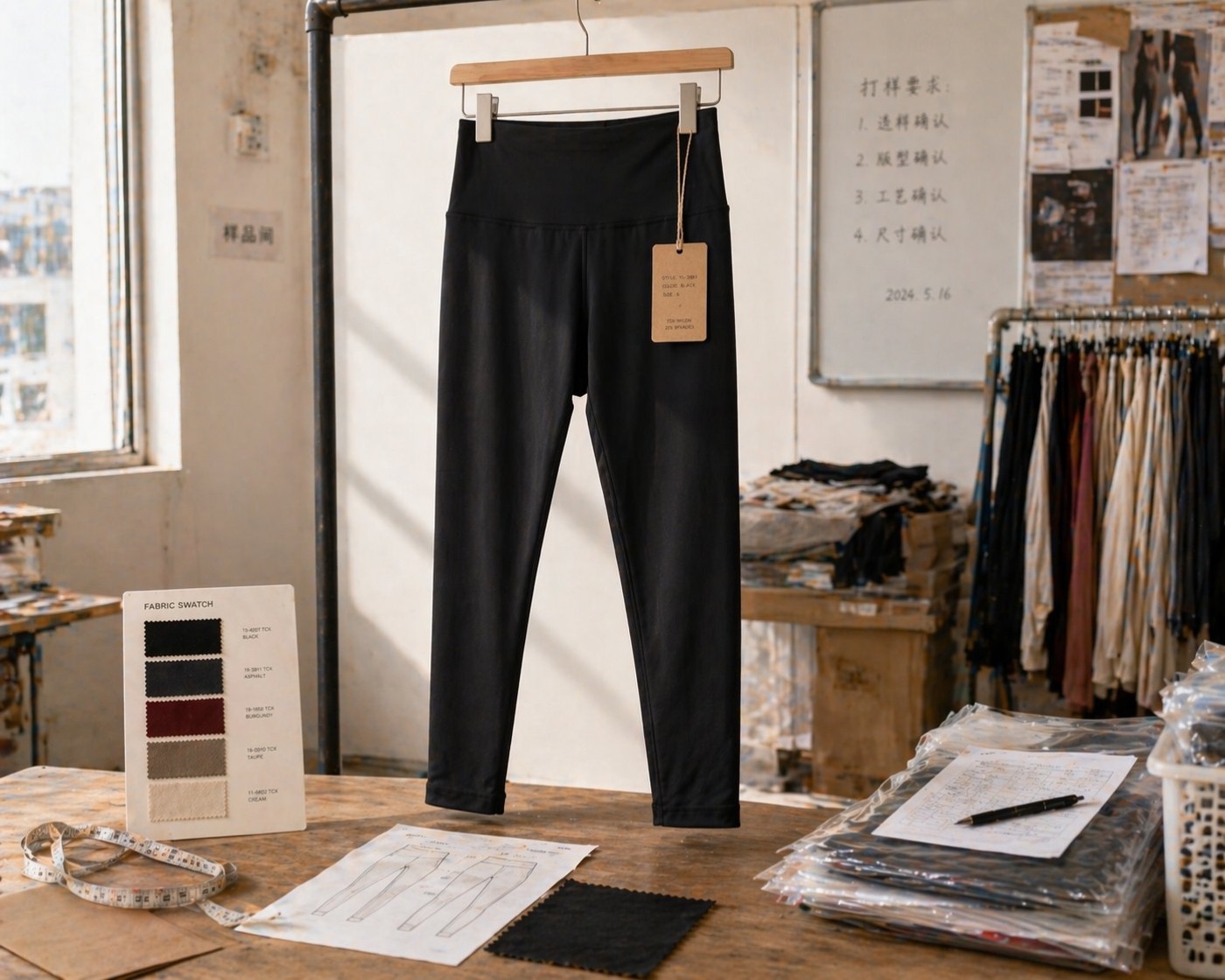
Designing the range
| Range size | Coverage | Who it suits |
|---|---|---|
| 3 shades | Light-neutral / medium-warm / deep | Honest launch minimum |
| 5 shades | Adds fair-cool and tan | Serious basics program |
| 6+ shades | Fine steps across depth & undertone | Category leaders, big inventory |
Think in two axes — depth (light to deep) and undertone (warm/neutral/cool) — and place shades to minimise the “nearest shade is wrong for me” gap. Three well-placed shades beat six clustered ones.
The manufacturing part nobody sees
Dip on the real structure: nudes shift visibly between rib, interlock and brushed faces — approve each (the same physics as set colour matching). Check on body: a swatch that looks right on a table can go grey or orange against skin; approve on-body photos across several skin tones in daylight. Opacity discipline: light nudes are the hardest squat-proof case — run them at the top of your density spec. Restock control: every restock is a new dye lot; keep physical standards per shade or the range drifts season to season.
Naming and presentation
Never ship “Nude” as a single shade name — name each shade (materials, coffees, minerals all work) and show every shade on a matching skin tone in imagery. The product page that lets customers pick “their” nude converts; the one implying nude = beige gets screenshots for the wrong reasons.
The inventory math
Every shade is a full colorway: its own dye minimum, size curve and imagery — five shades in a 4-size legging is 20 SKUs before your seasonal colours. This is why ranges launch at three and expand with data, exactly per the colorway framework, and why stock nude-feel programs (50-pc starts) are a popular way in.
How Yesseam supports nude programs
Our nude-feel microfibre fabrics run across sets, leggings and bralettes with custom shade development (structure-specific dips, on-body approval, retained standards) — from stock shades at 50 pcs to full custom ranges from 500 pcs per shade.
FAQ
How many nude shades does a launch need?
Three honest, well-spaced shades — light-neutral, medium-warm, deep — outperform a single beige and stay affordable. Expand to five or six once sell-through shows where your customers cluster.
Why do nude shades look different between batches?
Each restock is a new dye lot, and pale shades show lot drift most. The fix is factory-side: physical shade standards retained per shade, dip approval against the standard, and daylight (D65) QC on every batch.
Are light nude leggings automatically see-through?
They are the hardest opacity case — light shades reflect more light through the knit. They need your densest fabric spec (higher GSM, fine dense knit) and a full-stretch squat test at approval. Treat any light nude below ~220 GSM as suspect.
What MOQ does a custom shade carry?
Each custom-dyed shade behaves like any colorway — typically a few hundred pieces minimum per shade — while stock nude-feel shades start at 50 pcs per style with branding. Ranges usually mix both to control cash.
Developing this product?
Yesseam is a vertically integrated seamless activewear factory in Xiamen — in-house knitting, dyeing partners, sewing and QC, with stock programs from 50 pcs plain or 100 pcs with your logo, and custom development from 500 pcs. Send your idea or tech pack and we will come back with options and honest numbers within 24 hours.
Get a quote