Yesseam is a private label activewear manufacturer in Xiamen, China offering private label, OEM and ODM production. Put your brand on proven seamless styles, or build fully custom from your tech packs — made in-house with the tested, certified quality and consistency of a real, vertically integrated factory you can audit.
For eligible in-stock styles, the minimum is 50 garments in total without a logo or 100 garments in total with your own logo or labels. Mix available styles, colours and sizes. A two-piece set counts as two garments: 50 sets = 100 garments. Full custom OEM/ODM usually requires 300–500 garments per style per colour, depending on design, fabric and construction; custom knitted patterns generally require 500. Custom dyeing, fit changes and knit-in logos have separate development minimums.
Stock, no logo
50 garments total
Mix eligible styles, colours and sizes; current availability applies.
Stock with your logo or labels
100 garments total
Mix eligible styles, colours and sizes; current availability applies.
Full custom OEM/ODM
Usually 300–500 per style per colour
Confirm design, fabric, construction and the applicable minimum before ordering.
The fastest route to a sellable collection: apply your brand, labels and packaging to our proven, ready-to-produce seamless leggings, bras and sets. Ideal for first capsules and quick market tests.
OEM manufacturing
Send your tech packs and we manufacture exactly to spec — grading, fit, trims, branded labels and packaging to your standards. You own the design; we deliver the production.
ODM & design
Co-develop styles on top of our in-house designs and fabric library. We handle fabric/GSM selection, pattern and fit, logo method, Pantone matching, sampling and production planning.
Jacquard branding knitted into the fabric itself rather than printed on top — it cannot peel, and it does not change the hand.
What private-label brands get
Tested quality — in-line & final AQL inspection on every order, fit sample approved before bulk
Logo & packaging — heat-transfer, bonded, woven labels, hang tags, polybags, branded cartons
Custom color — Pantone matching available
Free logo mockups before sampling, revisions until approval
Certified supply — BSCI, GRS, OEKO-TEX Standard 100, ISO 9001
Export-ready — worldwide air/sea, DDP options
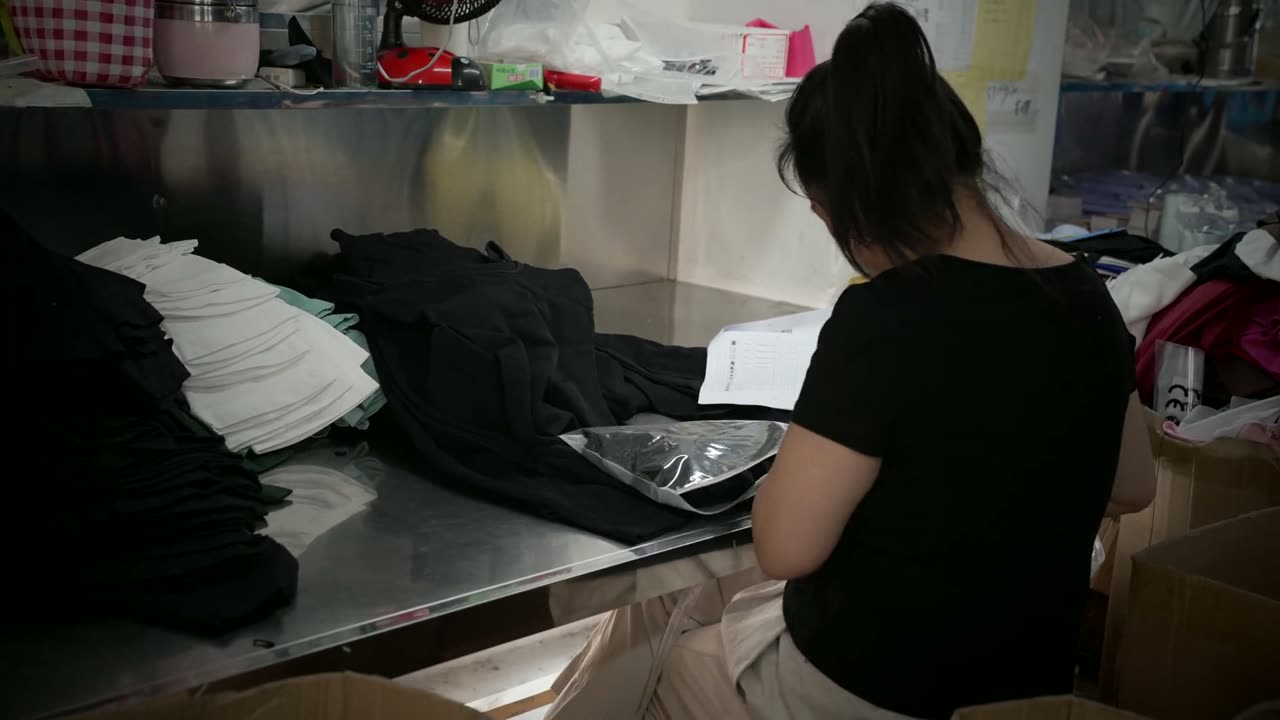
Folding and bagging at the end of the line — private label changes the bag, the tag and the box, not the garment inside.
What private label means on seamless
On seamless, private label starts from a style that already knits well: the fit block, the yarn and the knit structure are proven. What you change is everything the customer sees and touches — colour, logo, labels and packaging. What stays fixed is whatever lives in the knitting program. That split decides both your minimum and your lead time:
You want to change
Private label on a stock style
Needs custom development
Colour
Yes — dyed to your shade; each custom shade carries its own dye minimum
—
Logo
Heat transfer, silicone print, printed or woven labels
Knit-in jacquard logo, set up once in the knitting program
Labels, hang tags and packaging
Yes
—
Fit, length or rise
—
Yes — a new or adjusted fit block
Knit structure, rib and compression zones
—
Yes
Minimum order
50 garments total plain, 100 garments total with your logo; mix eligible stock styles, colours and sizes
Usually 300–500 garments per style per colour, subject to design and construction
Branding that survives a stretch fabric
Seamless knits stretch further and recover harder than most fabrics, which is unforgiving for anything applied on top of them. What holds up, and what to watch:
Method
Best for
Watch out for
Knit-in jacquard
Waistbands, tone-on-tone marks on leggings and bras
Subtle by nature; it is part of the fabric, so it cannot crack or peel
Heat transfer (HD / silicone)
Chest, waistband and leg logos
Needs a transfer made for high-stretch knits, or it cracks
Printed tagless neck mark
Anything worn next to the skin
Fibre and care information still has to appear on the garment
Woven label
A premium feel and fine detail
Stiffer — keep it away from friction zones
Hang tags, polybags and mailers
Retail and e-commerce presentation
Custom printed packaging can carry its own minimum
From your first branded capsule to repeat-order, multi-season programs, you work directly with the factory that makes your garments — with consistent quality, honest timelines and no middleman in between. Explore our seamless activewear and yoga apparel lines, or read the FAQ.
Putting your brand on a seamless style that already exists in a factory's library: it is knitted and dyed in your colour, finished with your logo, labels and packaging, and sold as yours. The fit, yarn and knit are already proven, which is why it is the fastest and lowest-minimum way to launch a seamless line.
What is the minimum order for private label seamless?
For eligible in-stock styles, the minimum is 50 garments in total without a logo or 100 garments in total with your own logo or labels. Mix available styles, colours and sizes. A two-piece set counts as two garments: 50 sets = 100 garments. Full custom OEM/ODM usually requires 300–500 garments per style per colour, depending on design, fabric and construction; custom knitted patterns generally require 500. Custom dyeing, fit changes and knit-in logos have separate development minimums.
Can my logo be knitted into the fabric?
Yes — a knit-in jacquard logo is programmed into the knit, so it cannot crack or peel. Because it is set up in the knitting program, it belongs to custom development rather than stock private label; the cost is mostly a one-time programming step rather than a per-piece charge.
Can a stock seamless style be made in my own colour?
Yes. Seamless garments are knitted undyed and dyed afterwards, so a stock style can be dyed to your shade. Each custom shade carries its own dye minimum, which is why it pays to launch with one or two colours and add more once a style sells.
Will a printed logo crack on seamless fabric?
It can, if the transfer is not made for high-stretch knits. A silicone or HD heat transfer designed for stretch fabric flexes with the garment; a stiff print placed over the most-stretched areas is the usual cause of cracking.
Which seamless styles can I private label?
Any style in our stock seamless range — leggings, sports bras and bralettes, tops, shorts, sets and underwear — can carry your logo, labels and packaging, from 100 garments in total (50 plain). Changing the knit itself, such as a new texture, compression map or knitted-in logo, turns the style into custom development; a new knitted pattern generally needs 500 garments per style per colour.
Do you offer ODM for seamless activewear?
Yes. With ODM you start from one of our existing seamless programmes — a legging, bra or set we have already developed — and adapt colour, length, waistband or knit details before your branding goes on; with OEM you bring your own design or tech pack and we develop it from the start. OEM vs ODM vs private label compares the three routes on cost, time and ownership.
Match your product, order size and branding
Choose a buying route before comparing factory quotes. Existing styles with your logo and fully custom development have different minimums.
Check each style’s fabric, size chart, colours and fit. A first in-stock branded order can mix eligible styles to reach 100 garments total: for example, 50 two-piece sets.
Mix eligible stocked sets, leggings and tops within the stock programme. New fits, custom yarn, custom colours or knitted-in logos are quoted as development.
Choosing premium activewear
Compare the selected sample’s composition, fit, stretch recovery, opacity, washing and seam finish. Agree the use, colours, sizes and acceptance criteria before bulk production; use the test report for the actual material, not a brand-name comparison.
First-order questions: product, quantity, logo and quality
Can I order 50 two-piece yoga or Pilates sets with my own logo?
Yes, for eligible in-stock styles. Fifty two-piece sets count as 100 garments, meeting the stock private-label minimum. You can mix available styles, colours and sizes. Heat-transfer or printed branding and labels belong to the stock programme. New fits, custom colours or yarn, knitted patterns and knit-in logos require separate development and an applicable minimum. Choose the actual styles first, then confirm availability, fabric, fit, branding and sample acceptance before ordering.
Can I launch with 50–100 garments, including leggings and sports bras?
For eligible stock, 50 garments in total is the minimum without a logo; 100 garments in total is the minimum with your logo or labels. Mix available styles, colours and sizes. A two-piece set counts as two garments. An order of 50–99 garments does not meet the standard stock private-label minimum. Full custom OEM/ODM usually requires 300–500 garments per style per colour, depending on design, fabric and construction; custom knitted patterns generally require 500, with separate minimums for special development.
How do I approve premium yoga sets, leggings and sports bras before a first order?
Start with a specific style, colour and size, then approve a physical sample for your intended use. Compare composition, fabric weight, fit, stretch recovery, opacity at stretch, washing and seam finish; for a sports bra, also check support, straps and the underband. Agree the test conditions and acceptance criteria, and request reports that identify the actual material or sample where needed. Catalogue specifications and factory QC guidance help you choose what to check; they do not replace a test report for the selected style. Confirm stock availability and the branded sample before approving the order.
Compare actual styles before requesting samples
These are existing catalogue specifications. The linked pages show product photos, colour options and sizes; confirm the selected variant and current availability before ordering.
Compare six actual style codes, their published compositions and size options, and the evidence to request for sample approval. Style and material evidence.
Evidence to agree before approving a sample
Connect each approval to a specific catalogue style or custom brief. Keep the selected colour, sizes, branding and approved sample as the reference for the bulk order.
Decision
Evidence to use
What to confirm
Product and material
Catalogue style, product photo, composition and size options
Record the style code and selected variant. The composition listed for one style does not apply to the entire collection.
Quantity and branding
Plain stock, branded stock or custom development
Confirm total garments, style/colour/size breakdown and availability. Logo application, labels and new knitted designs have different scopes.
Physical sample
Selected garment with the agreed fit and branding
Check measurements, movement, coverage, bra support where relevant, logo placement and finish. Approve the sample and record any revisions before bulk.
Material and QC results
Report for the selected sample or material lot, when required
Identify the sample or lot, test method, date and measured result. Company certificates and published QC targets do not replace a style-specific test report.
The linked specifications and factory QC guidance are selection and acceptance references. Obtain the evidence for the chosen sample; these pages do not claim a new laboratory result for every catalogue item.