Quick answer: At a 100–300 piece run, expect ~US$7–12 per legging and ~US$4–8 per bra ex-works. A realistic first run lands at US$3,000–10,000 all-in (samples + bulk + branding + freight).
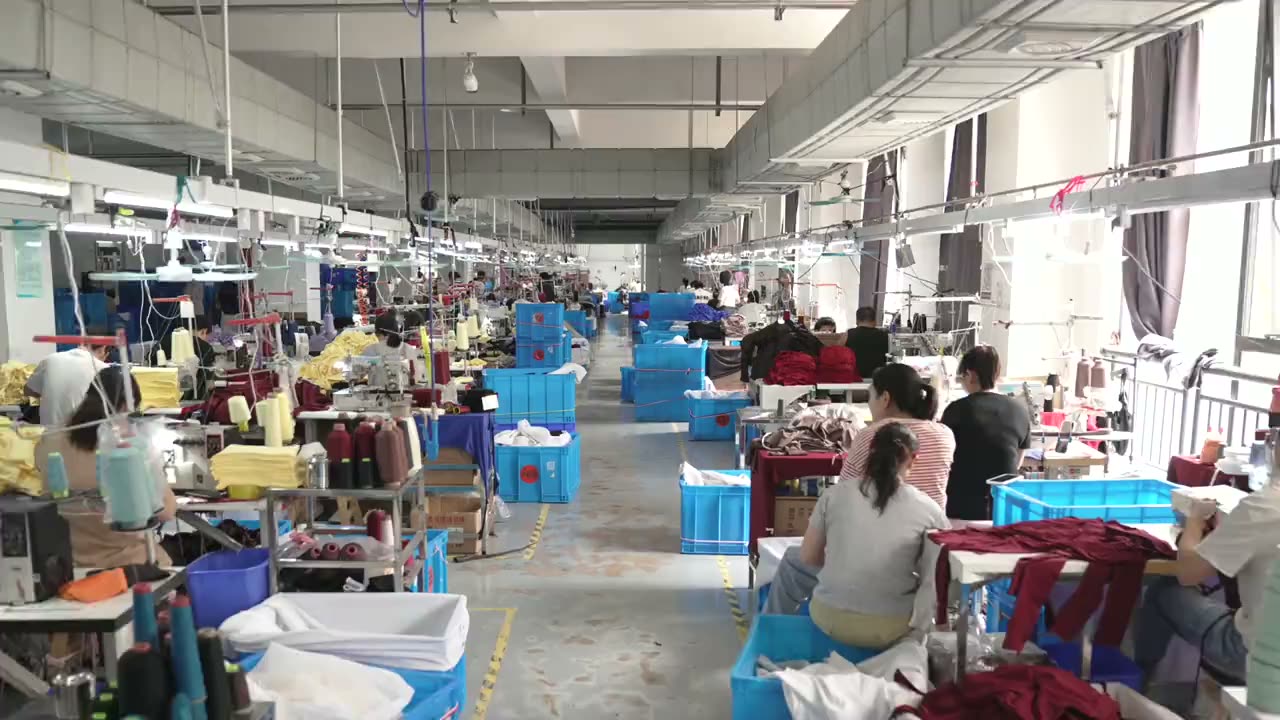
Per-unit garment cost (ex-works)
This is the factory price per piece, before shipping and duties. It drops with volume and rises with fabric weight, features (pockets, zips, bonding) and finish.
| Item | 100–300 pcs | 1,000+ pcs |
|---|---|---|
| Seamless leggings | US$7–12 | US$5–8 |
| Sports bra | US$4–8 | US$3–5 |
| Matching set (bra + leggings) | US$11–18 | US$8–12 |
| Shorts / biker shorts | US$5–9 | US$4–6 |
Add roughly US$0.30–1.50 per piece for logos (heat-transfer, silicone, embroidery), woven labels, hangtags and polybags.
Sample & development costs
- Development sample: ~US$30–80 per style (often credited against bulk).
- Custom fabric / Pantone match: sometimes a small fee or higher MOQ per color.
- Rounds: budget for 1–2 sample iterations to nail fit.
A realistic first-run budget
Example: 2 styles, ~100 pcs each, with branding and air freight.
| Line item | Estimate |
|---|---|
| Samples (3–4 rounds across 2 styles) | US$200–400 |
| Bulk: ~200 pcs total | US$1,800–3,600 |
| Logos, labels, hangtags, polybags | US$150–400 |
| Freight (air) + duties | US$400–1,200 |
| Typical first run | US$3,000–6,000 |
Add a website (US$0–500 on Shopify) and launch marketing (US$1,000–3,000) and you have your true day-one number.
Where brands waste money
- Ordering too many SKUs at once instead of testing 2–4 hero styles.
- Trading-company markups (you pay a middleman, not the maker).
- Skipping samples and paying for it in returns.
- Over-ordering before a style is proven.
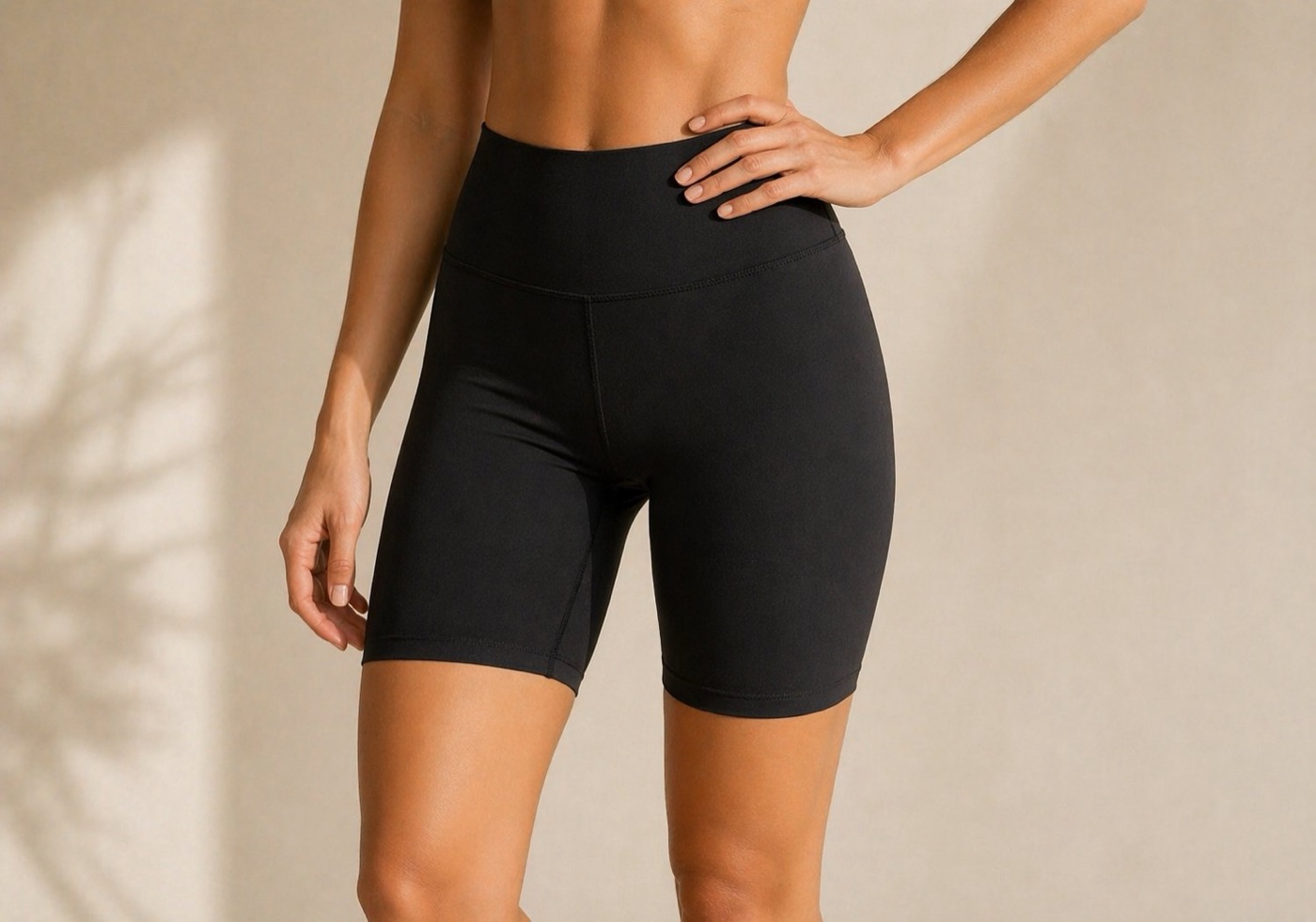
The cost anatomy of one garment
Take apart a seamless legging's factory price and the layers are consistent across the industry: fabric (yarn) is the dominant share at roughly 60–70% of garment cost — which is why fiber choice and GSM move price more than anything else. Labor and machine time take the next slice; seamless shifts cost from sewing labor to knitting-machine amortisation, which is why seamless factories obsess over machine utilisation. Trims (elastic, thread, labels), dyeing and finishing, QC and packing each take single-digit percentages, and factory overhead plus margin closes the stack. When a quote drops dramatically, one of these layers got thinner — usually the fabric.
What moves a quote up or down
Four levers explain most price differences between two leggings that look identical online. Fiber: nylon/spandex hand-feel costs more than polyester; recycled certified yarns carry a premium over virgin. Weight: 260 GSM squat-proof fabric simply contains more yarn than a 190 GSM summer knit. Construction: compression zoning, scrunch seats, pockets and bonded hems all add programming or process steps. Order structure: one style in one color at 500 pieces prices better than five colors at 100 each, because every color is a separate dye lot. Understanding the levers lets you engineer to a target price without gutting quality.
The costs founders forget to budget
The garment is only part of the check. Sampling rounds (fees plus courier), lab dips for custom Pantones, compliance testing if you sell into the EU (REACH) or want retail accounts, freight — which can double in peak season — import duty, 3PL receiving fees, and the quiet killer: returns handling at 15–25% for online activewear. A useful rule: whatever your bulk invoice is, hold another 25–35% for everything wrapped around it. The DDP guide shows how door-to-door quoting simplifies the freight-and-duty slice.
Duty, freight and compliance — with the actual numbers
Those three lines are where estimates get lazy, so here they are from the primary sources rather than from memory. Duty first: the rate is set by the tariff heading your garment falls under, not by what you call it, and the spread between headings is wide enough to change a business case.
| Garment | US tariff heading | Column 1 “General” duty |
|---|---|---|
| Seamless leggings (women’s knit trousers, synthetic fibres, ≥5% elastomeric yarn) | 6104.63.20.06 | 28.2% |
| Tank tops & tees, knitted, man-made fibres | 6109.90.10 | 32% |
| Sports bras / brassieres, man-made fibres | 6212.10.50.20 | 16.9% |
Read that table twice before you plan an assortment. A bra and a legging are both “activewear” to your customer and eleven and a half points apart to US Customs, charged on the customs value — normally your FOB price. These are the Column 1 General rates as published; any additional duties in force for your country of origin stack on top of them, so have your customs broker quote the combined rate for your entry date rather than assuming the headline figure is the whole bill.
Freight is the line founders over-worry about. Container rates are public and they move weekly — here is where they sat in the first week of September 2026:
| Lane (Drewry WCI, 3 Sep 2026) | US$ per 40ft | Week on week |
|---|---|---|
| WCI composite, eight major lanes | $4,465 | flat |
| Shanghai → Los Angeles | $7,185 | +5% |
| Shanghai → New York | $9,587 | +3% |
| Shanghai → Rotterdam | $4,092 | −5% |
| Shanghai → Genoa | $4,368 | −10% |
Divide the lane rate by the units your forwarder fits in the box — ask for the carton dimensions and piece count for your style, since poly-bagged seamless knitwear packs densely. On any plausible fill the answer lands well under a dollar a unit, which is the point: against a $8.50 legging, ocean freight is a rounding error next to returns handling at 15–25%. Air freight is the exception that earns the anxiety, and it is a schedule decision, not a shipping one — that is what the timeline planner is for.
Compliance is the line founders under-worry about. If you sell into the EU, REACH Annex XVII Entry 72 — added by Commission Regulation (EU) 2018/1513 — restricts carcinogenic, mutagenic and reprotoxic substances in clothing and accessories, and the text names sportswear explicitly. It has applied to goods placed on the market since 1 November 2020, sets limits by weight in homogeneous material (cadmium, for instance, at 1 mg/kg), and excludes garments covered by the PPE Regulation (EU) 2016/425 or the Medical Devices Regulation (EU) 2017/745. Practically: budget a test report per fabric quality, not per style — one qualified base fabric carries every colourway knitted from it. An OEKO-TEX Standard 100 certificate on the fabric is the usual way buyers evidence this, and it is the document a retail account will ask for first.
Sources
| Source | What it establishes here |
|---|---|
| Harmonized Tariff Schedule of the United States, USITC — 2026 Revision 18, headings 6104.63, 6109.90, 6212.10 | The three duty rates in the table above, as published |
| Commission Regulation (EU) 2018/1513 — EUR-Lex, amending REACH Annex XVII (Entry 72, Appendix 12) | Scope covering sportswear, the 1 November 2020 application date, concentration limits and the PPE / medical-device exclusions |
| Drewry World Container Index — assessment of 3 September 2026 | Container spot rates on the four lanes above and the composite index |
Real 2026 benchmarks instead of guesses
Most cost articles quote "$8–30 per piece" and move on. We published the actual distribution from our full 2026 factory catalog — 3,038 seamless styles (Q3-2026 export): median FOB wholesale sits at $14.90 for a two-piece yoga set, $8.50 for leggings, $7.90 for bras and tops, $7.10 for swimwear, with the middle 50% of each category inside a narrow band. The full tables, fabric-composition norms and methodology are in the wholesale price benchmark — free to cite with a link.
How unit cost falls with volume (the real curve)
The cost curve in seamless is front-loaded: the big step down happens between sample-scale and the first proper dye lots, when setup and dyeing minimums stop dominating. Moving from 50-piece stock orders to ~500-piece custom runs typically improves unit economics meaningfully; from 300 to 1,000 the gains continue but flatten; past a few thousand pieces per style you are negotiating yarn pricing, not garment pricing. Practical implication: don't chase 1,000-piece pricing with 300-piece demand — the discount is real but smaller than the markdown risk of unsold stock.
Negotiating cost without gutting quality
Everything on a quote is a lever, but they are not equal. Safe to negotiate: consolidation (more styles on one fabric), color count (fewer dye lots), packaging simplification, payment terms after a trade history, and timing (off-peak production slots). Dangerous to negotiate: GSM, fiber content and QC scope — those are the product. A factory pushed below its floor doesn't lose margin, it quietly relocates the loss into thinner fabric or skipped inspection. Name your target price and ask "what would have to change to hit this?" — the answer tells you exactly what you'd be trading away.
FAQ
How much to manufacture a pair of leggings?
About US$7–12 per unit at 100–300 pcs; US$5–8 at 1,000+.
Realistic first-run budget?
US$3,000–10,000 all-in depending on styles, customization and freight.