Quick answer: A seamless machine knits the whole garment in one pass, so a machine fault doesn't stay on one piece. A worn needle, a build-up of lint or a drifting yarn tension repeats on every garment that follows until someone stops the machine. That's why our 50 Santoni machines go through a check before every shift, cleaning during and after each shift, and preventive maintenance every week, and why a machine that fails a check doesn't knit bulk.
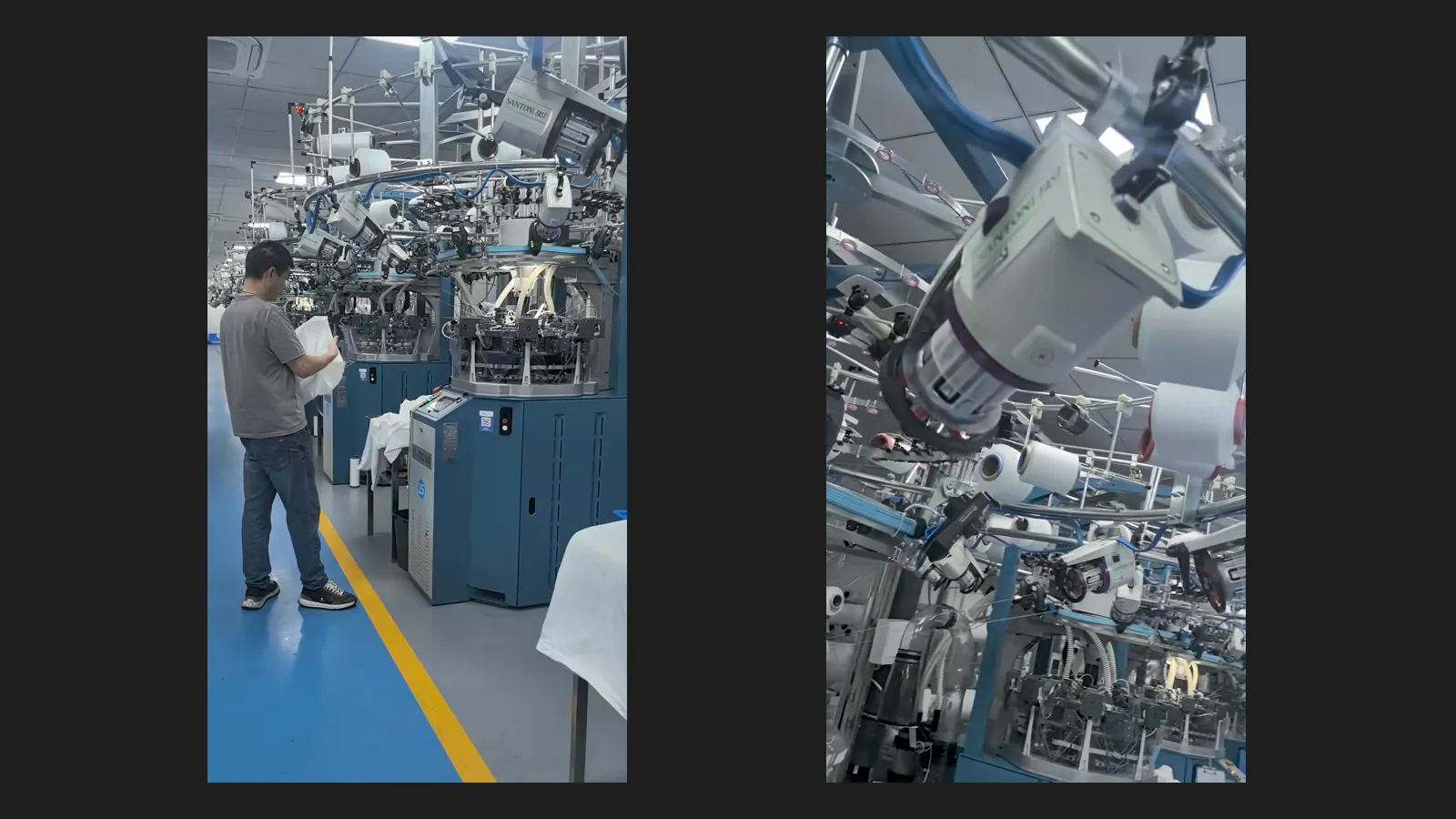
Our knitting floor
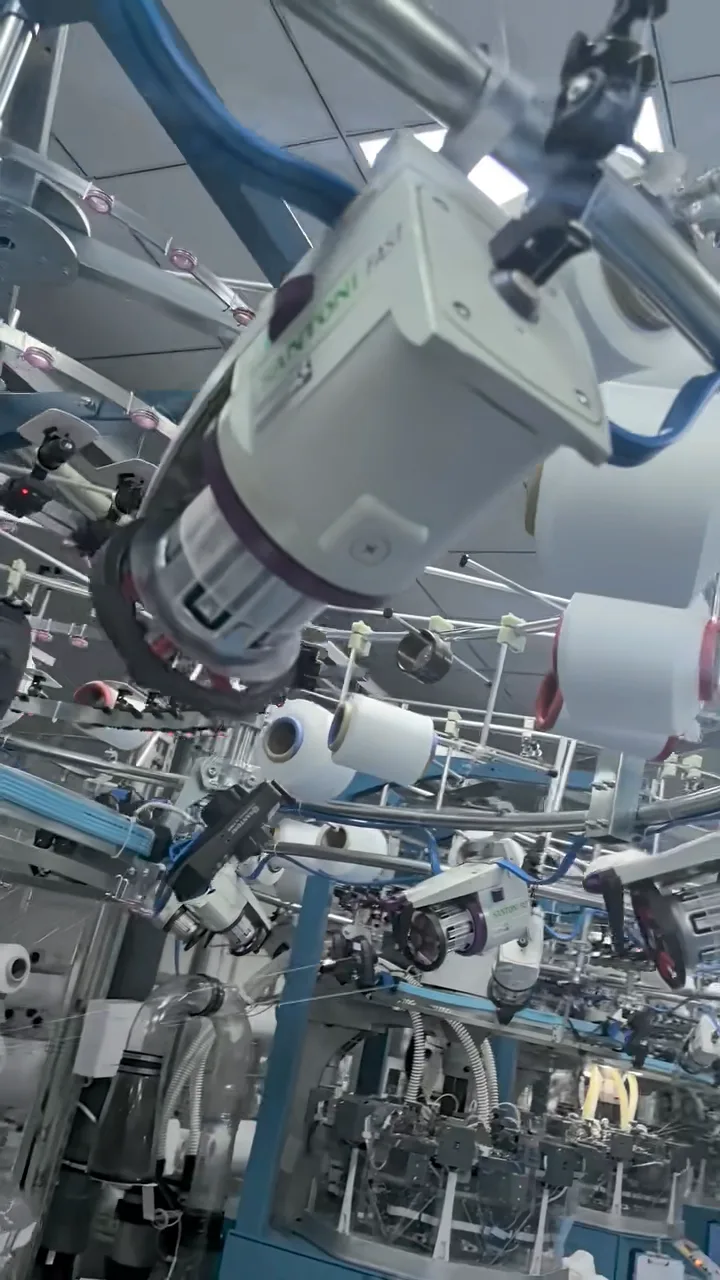
We knit seamless leggings, sports bras, tanks, shorts, shapewear and matching sets on 50 Santoni circular machines, mainly the SM8-TOP2V, in 28G and 32G, with cylinders from 17 to 21 inches. Each style is matched to a machine through its yarn, knit structure and machine settings, and then through finishing.
A cylinder's diameter isn't a waist measurement. Whether a style comes out as an S, M or L depends on the number of needles, the stretch of the yarn, the loop length and how much the fabric shrinks in dyeing and finishing. We confirm each size by knitting it before bulk.
Before every shift: check, test, approve, then run
Each shift starts with the same sequence: check the machine, run it slowly, approve the first piece, and only then start bulk.
- Safety. Guards, emergency stop and alarms all work.
- The job. Machine number, cylinder, gauge, knitting program, order sizes and yarn lot all match the order.
- Knitting parts. Needles, needle latches, sinkers and yarn guides show nothing unusual where they can be inspected.
- Lubrication. Oil level, oil pressure and the oil alarm are normal, with no leaks.
- Yarn feed. Feed wheels, yarn guides, the yarn path and elastane tension match the knitting spec.
- Air and suction. Pressure is right for the machine, and the filters, suction and garment take-off work.
- Trial run and first piece. At low speed there's no unusual noise or vibration, and the first piece has no holes, dropped stitches, visible vertical lines or size problems.
A machine that fails the check doesn't go into bulk. We take it out of production first and find the cause second.
During and after every shift
| Area | What we do |
|---|---|
| Creel and yarn guides | Clear fluff, broken yarn ends and dust, and check that the yarn runs freely |
| Knitting area | Clean the parts operators are allowed to reach, following the machine's safety instructions, and watch for needle faults |
| Lubrication | Check oil level, pressure, leaks and alarms |
| Yarn feed and sensors | Check the feed wheels, the broken-yarn sensors and how steadily yarn feeds |
| Suction and take-off | Empty the dust collectors and check suction, take-down and garment take-off |
| Quality patrol | Log vertical lines, dropped stitches, holes, horizontal bars, oil marks and size deviations |
The machine is checked before each shift starts, patrolled while it runs, and cleaned and logged when the shift ends.
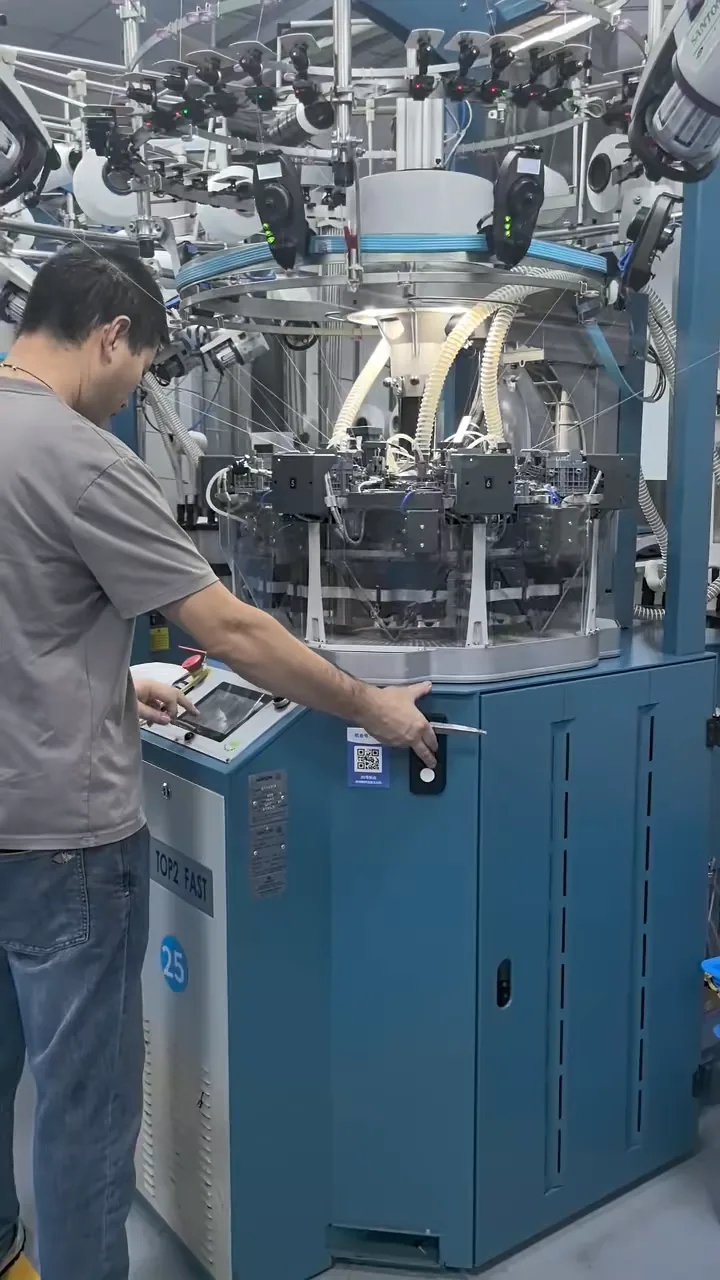
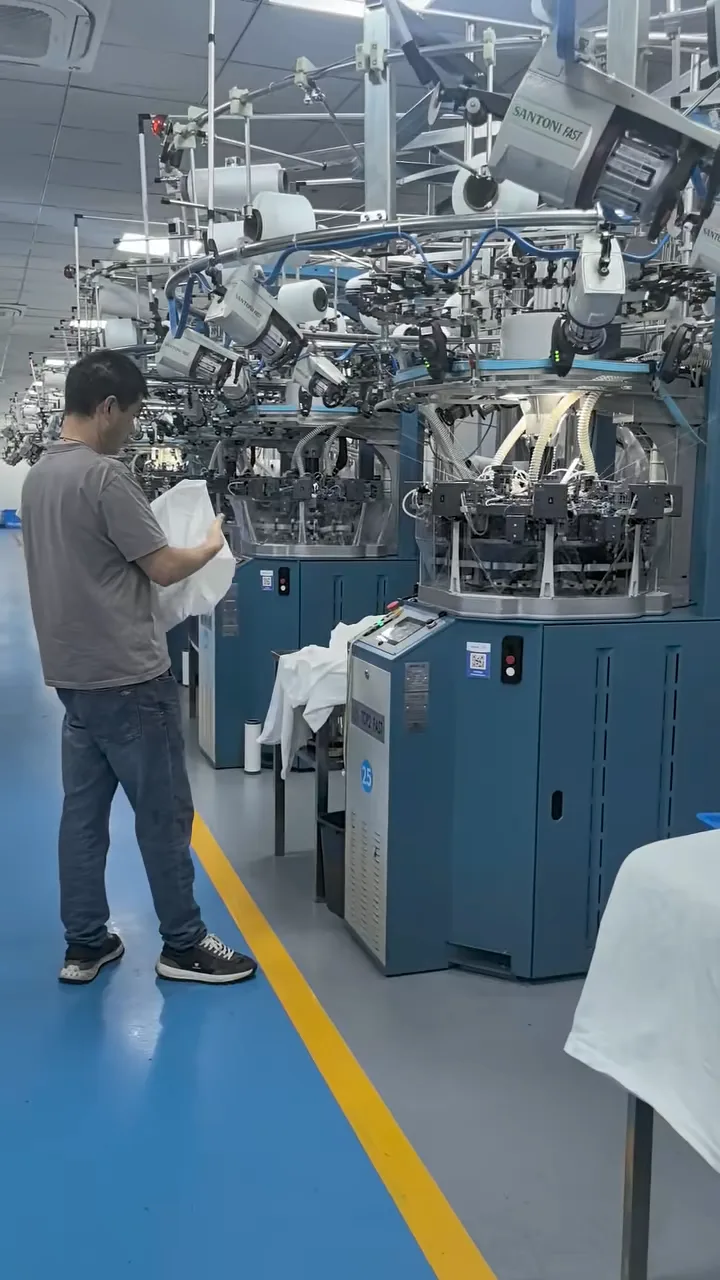
Every week: preventive maintenance
| System | What we look for |
|---|---|
| Cylinder, needle tricks and needles | Wear, debris, sticking needles, stiff latches and sinker faults |
| Cams and needle selection | Unusual friction, selection faults and pattern errors that keep coming back |
| Yarn feed and tension | Yarn guides, feed wheels, even tension and parts that wear quickly |
| Drive | Belt wear, unusual noise and visible vibration |
| Lubrication and air | Oil lines, filters, oil or air leaks and condensation |
| Controls and sensors | Automatic stops, alarms, sensors and wiring |
| Test knit after maintenance | Pattern, fabric surface, size, stretch and an approved first piece |
The weekly check is our routine, not the maker's service schedule. Oil changes, greasing, filter changes and strip-downs follow Santoni's manual for each model, the machine's running hours and how hard it's been working, so they don't run on one fixed calendar.
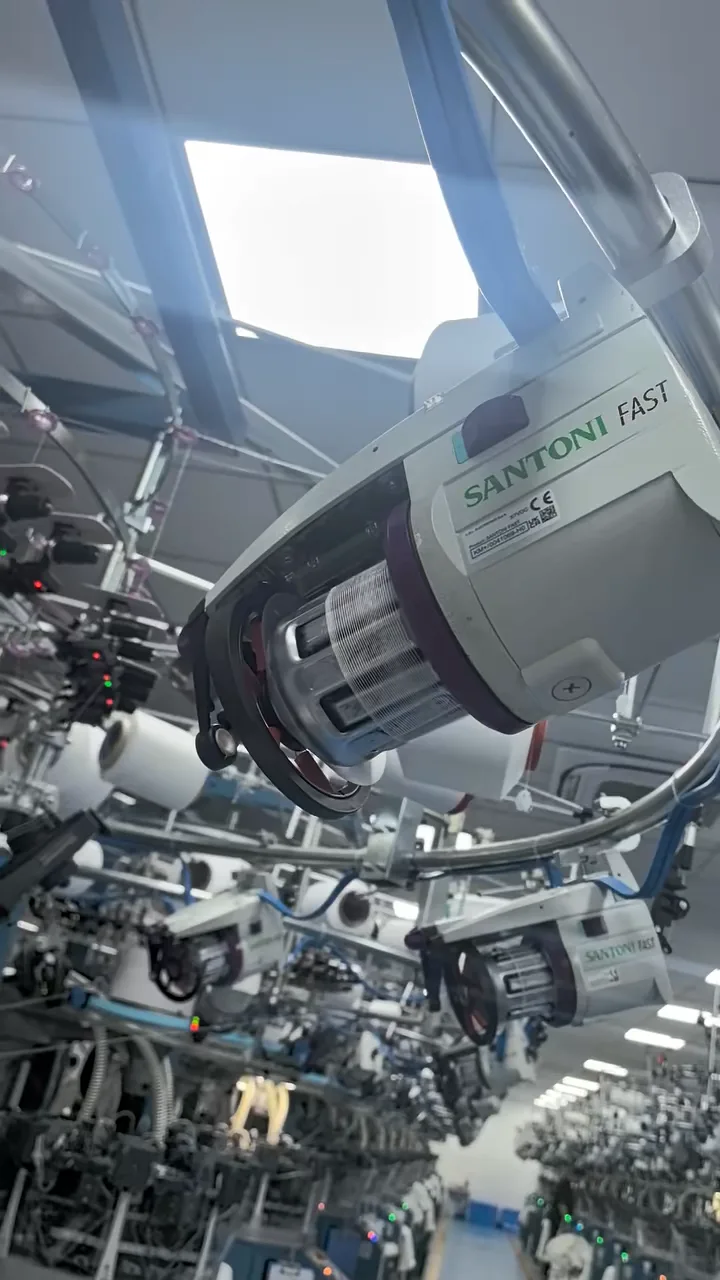
How we manage needles
Needles get replaced at once when they fail, checked on a schedule when they don't, and judged on running hours for anything beyond that.
| When this happens | What we do |
|---|---|
| A broken or bent needle, a damaged hook or a sticking latch | Stop the machine, follow the safety procedure and replace the needle |
| A vertical line, dropped stitch or run in the same position | Trace the needle, needle trick, sinker and cam at that position |
| Needles keep breaking | Check yarn tension, the needle tricks, the cams and the machine, not only the needles |
| Normal continuous running | Spot-check needle wear every week, and decide on a deeper check from running hours and the quality trend |
| A full needle change | Our mechanics decide from wear, fault frequency and the maker's guidance |
There's no needle-change interval that suits every seamless machine. Anyone who promises a full needle change every so many days, for every machine, isn't looking at the machine model, the yarn, the workload or the repair record.
What a defect usually points to
| What you see on the garment | Where we look first |
|---|---|
| Vertical lines or needle tracks | Worn needles, needle tricks or sinkers, or a fault at one position |
| Holes, dropped stitches or runs | Damaged needle hooks or latches, broken yarn or the wrong tension |
| Horizontal bars or colour bands | Yarn feed, tension, yarn lot and dyeing |
| Uneven tightness or stretch | Elastane feed, take-down and knitting settings |
| A scrambled pattern | Needle selection, the knitting program and the control parts |
| Oil marks or black spots | Oil leaks, too much lubricant, lint and housekeeping |
| Sizes that drift | Loop length, take-down settings, yarn stretch and finishing shrinkage |
These are where we look first, not proof that the machine caused the defect. We check them against the yarn lot, the machine settings and the dyeing and finishing records before deciding the cause. For more on each defect, see common seamless knitting defects.
Tracing every order
- One file per machine. Machine number, cylinder, gauge, running hours, repairs and parts replaced.
- One spec per order. Yarn type and lot, feed settings, knit structure and size standards.
- First-piece approval again after any change. A new style, new yarn, adjusted settings or a major repair means a new first piece.
- Machine faults stop the machine. A machine with a fault comes out of production, so one defect doesn't turn into hundreds.
- Every fabric problem traced back. To the machine, the shift, the time it was knitted and the person who handled it.
The aim is garments that look the same, stretch the same and measure the same from the first piece to the last, delivered when we said they would be.
Five questions to ask any seamless supplier
- How many machines do you run, which model and gauge, and can you send a video of them working?
- What do you check before each shift, and what happens to a machine that fails?
- How often is each machine maintained, and is it recorded?
- When a defect shows up mid-run, who stops the machine, and how are the pieces already knitted checked?
- Do you knit and approve a first piece again after changing the yarn, the settings or the style?
A supplier who answers these quickly and in detail has a routine. If the answers stay vague, ask to see the floor or a maintenance record.
FAQ
How often do you maintain your seamless knitting machines?
Every shift and every week. Each machine is checked before every shift, patrolled while it runs, and cleaned and logged when the shift ends. Every week it gets preventive maintenance and a test knit. Oil changes, greasing and strip-downs follow Santoni's manual for each model and the machine's running hours.
How often should needles on a seamless machine be changed?
There's no single interval for every machine. We replace a needle at once when it breaks, bends or sticks, spot-check wear every week, and decide on a full change from wear, fault frequency, running hours and the maker's guidance.
What causes vertical lines on seamless leggings?
Usually a worn or damaged needle, needle trick or sinker at one position on the cylinder. Because the machine knits every piece the same way, the line repeats on each garment until the fault is fixed, which is why operators stop the machine at the first repeat.
Does cylinder diameter decide the garment size?
Not on its own. The finished size depends on the number of needles, the stretch of the yarn, the loop length and how much the fabric shrinks in dyeing and finishing. We confirm each size by knitting it before bulk.
Which machines do you use?
Santoni circular seamless machines, mainly the SM8-TOP2V. We run 50 of them, in 28G and 32G, with cylinders from 17 to 21 inches.
What's the minimum order for seamless styles?
For eligible in-stock styles, the minimum is 50 garments in total without a logo, or 100 garments in total with your own logo or labels. Full custom OEM or ODM is usually 300–500 per style per colour, and a development sample takes 7–10 days.