Anti-Chafing Activewear: How Comfort Is Actually Engineered
Chafing is the complaint that ends repeat purchases quietly — customers rarely email about it, they just don't come back. Preventing it is concrete engineering, and it is the reason seamless construction exists.
Quick answer: Chafing = friction × moisture × repetition. The four design levers: remove seams from friction zones (inner thigh, underarm, underband — seamless construction’s whole point), keep skin dry (wicking fibres move the sweat that makes skin fragile), flat or bonded finishes where seams must exist, and coverage choices (longer inseams for thigh protection). A garment that controls all four is what customers describe as “you forget you’re wearing it.”
Where chafing actually happens
Four zones cause almost all of it: inner thighs (skin-on-skin or seam-on-skin during running and walking), the bra underband (repetitive rub under load), the waistband edge (bending and twisting), and underarms in tops. Each is a place where a traditional sewn seam concentrates pressure on moving skin.
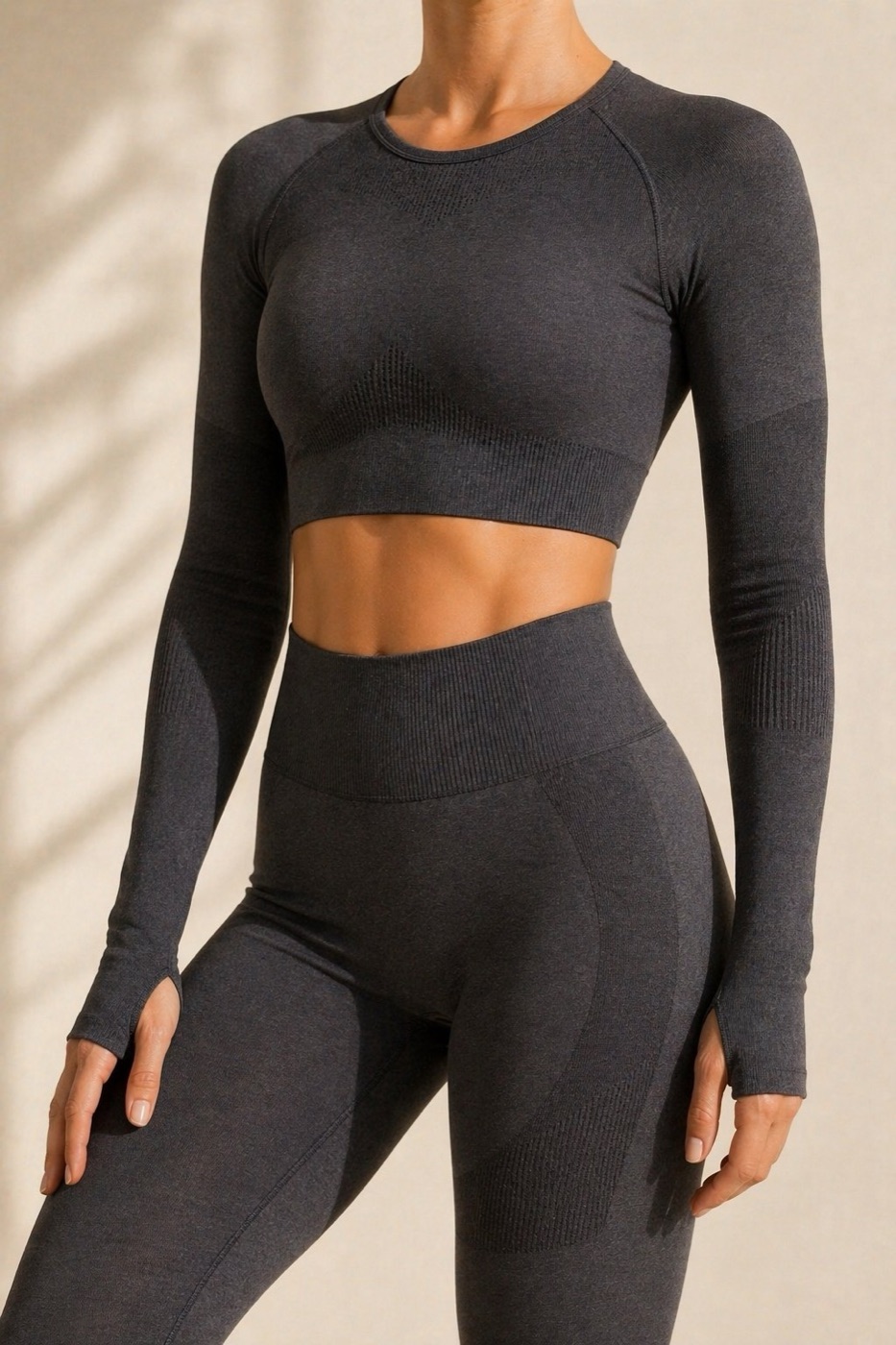
Lever 1: remove the seam entirely
A circular-knitted garment has no side seams and no inner-leg seam — the classic chafe lines simply do not exist. This is not a marketing line; it is the founding use case of the technology (it came from hosiery and underwear for exactly this reason). Where a seamless garment still needs a join (gusset, shoulder), the join is placed off the friction path — the same placement logic as the camel-toe guide.
Lever 2: keep the skin dry
Wet skin chafes at a fraction of the friction dry skin tolerates. That makes moisture management an anti-chafing feature, not just a comfort one: capillary wicking through fine-filament nylon or polyester moves sweat off the contact zones. Cotton in friction zones does the opposite — it holds water against the skin, which is why cotton-rich leggings chafe on long sessions.
Lever 3: when a seam must exist, flatten it
Bras and hybrid styles still carry some seams. The anti-chafe finishes, in rising order of cost: flatlock stitching (seam allowances lie flat, no ridge), bonded or taped seams (glued, zero stitch bulk), and knit-in zones replacing the seam altogether (the seamless bralette’s underband — see how bralettes are made). Spec the finish per zone in the tech pack, not garment-wide — bonding everywhere doubles cost for no extra comfort.
Lever 4: coverage as protection
For thigh chafe specifically, the biker short is the product-level answer: a 20–25 cm inseam puts fabric where skin would meet skin. This is why bike shorts outsell their fashion cycle in warm climates — they are functional anti-chafe garments wearing a trend costume.
How to test it before bulk
Chafe shows up in motion, not on a mannequin: wear-test samples through a real 45–60 minute session (run, flow, spin) and inspect skin contact zones afterward. Check the inside of the garment too — knots, label edges and trim ends are micro-chafe sources QC can catch at inspection.
How Yesseam builds for it
Seamless-first construction, gussets set off the friction path, flatlock or bonded finishes specced zone-by-zone, and wicking fabric defaults — comfort engineering is the quiet reason our repeat-order rate looks the way it does.
Sources & test methods
Chafing is a friction-and-moisture problem, so the measurable inputs are abrasion behaviour, surface smoothness and moisture handling. These are the standard methods a lab report on an anti-chafe fabric should reference:
| Method | What it measures | Why it matters for chafing |
|---|---|---|
| ASTM D3884 — Abrasion Resistance of Textile Fabrics (rotary platform, double head) | How the surface survives repeated rubbing | Inner-thigh contact is exactly this test, run for months |
| ISO 12947 — Determination of the abrasion resistance of fabrics by the Martindale method | Abrasion cycles to failure or appearance change | The ISO-side counterpart European buyers usually request |
| ISO 12945-2 — Fabric propensity to surface fuzzing and pilling (Martindale) | Pill formation on the surface | Pills are hard points; a pilled inner thigh chafes far more than a smooth one |
| AATCC test methods (moisture management, wicking) | How fast moisture moves through and out of the fabric | Wet skin under friction is where chafing actually starts |
| ISO 105-E04 — Colour fastness to perspiration | Shade and finish stability against sweat | A degraded finish changes surface friction over the garment’s life |
| OEKO-TEX® Standard 100 | Harmful-substance limits, next-to-skin class | Rules out finishes that irritate skin already under friction |
FAQ
What actually causes chafing in leggings?
Friction concentrated by a seam or fabric edge, multiplied by moisture and repetition. Inner-thigh seams on traditional cut-and-sew leggings are the classic case — the seam ridge rubs the opposite leg thousands of times per session.
Is seamless really better against chafing?
Structurally yes: no side or inner-leg seams means the highest-risk rub lines don't exist. You still need moisture management and clean interior finishing — seamless removes the biggest cause, not every cause.
Why do cotton leggings chafe more?
Cotton absorbs and holds sweat against the skin, and wet skin chafes at much lower friction. Performance nylon/polyester moves moisture away from contact zones, keeping the skin's friction tolerance high.
What should brands spec to prevent underband chafe?
A knit-in or bonded underband rather than a raw elastic seam, wicking fabric at the band, and a wear-test protocol under real load. The underband is the most complained-about chafe zone in bras — it deserves its own spec line.
Can compression shorts cause chafing?
Yes, in three situations: the leg band rides up so skin meets skin at the inner thigh, a sewn inner-leg seam rubs during running, or the fabric holds sweat against the skin. The fixes are a longer inseam (the 20–25 cm end for thigh protection), a knitted-in leg band that grips without cutting in, and seamless or flatlock construction through the inner thigh.
What should I look for in activewear that prevents chafing?
Construction rather than brand: no seams on the friction zones (inner thigh, underarm, bra underband), flatlock or bonded finishes where a seam has to exist, fabric that moves sweat away from the skin, and enough coverage where skin meets skin. A garment that gets all four right is the one wearers describe as forgettable.
What are seamless slip shorts?
Lightweight seamless shorts worn under dresses and skirts, mainly to stop inner-thigh chafing. They are thinner and smoother than training shorts so they do not show through clothing, and usually have a longer inseam so the fabric covers the zone where the thighs meet.
How does seamless technology help prevent chafing during cardio?
By removing the seams where friction concentrates. Seamless leggings and bras have no side or inner-leg seams and no sewn elastic at the waistband or underband — those are knitted in — so the rub lines behind most running chafe simply are not there. Knitted ventilation zones keep the skin drier, which matters because wet skin chafes at much lower friction, and knitted leg bands grip without riding up. Where a seam has to exist, it should be flatlocked or bonded.
Which running brands offer clothing designed to reduce chafing?
Nike and Brooks provide specific product examples. Nike describes soft seams on the brief liner of its Tempo Dri-FIT running shorts (style HM6096) as a feature that helps reduce chafing. Brooks describes its Source Tight (style 211340) as having “minimal seaming” with a moderate level of compression — fewer seams is the same lever, although Brooks does not use the word chafing on that page. These are product-level claims from the brands, not a ranking or a guarantee that every garment they sell prevents chafing. Compare seam placement, liner comfort, fit and coverage on the exact style, then wear-test it for your activity.
Developing this product?
Yesseam is a vertically integrated seamless activewear factory in Xiamen — in-house circular knitting, dyeing partners, sewing and QC, with stock programs from 50 pcs plain or 100 pcs with your logo, and custom development usually from 300–500 garments per style per colour. Send your idea or tech pack and get options and honest numbers within 24 hours.
Get a quote