Dye-Sublimation vs Screen Print: Which Suits Your Style?
Both live in our print room, a few metres from the sewing lines — so we have no method to sell you. Here's how each works, where each shines, and the honest limits nobody puts on the sales page.
Quick answer: Dye-sublimation dyes the design into polyester fabric itself — zero hand-feel, all-over prints, photographic colour — but it only works on light-coloured, high-polyester fabric. Screen print sits ink on top: bold spot colours on any fibre including nylon and dark grounds — best for logos and graphics, not all-over coverage.

At a glance
| Dye-sublimation | Screen print | |
|---|---|---|
| Fabric | Light polyester only | Any fibre, incl. nylon & dark |
| Coverage | All-over, gradients | Logos & spot graphics |
| Hand-feel | None — in the fibre | Slight layer on top |
| Durability | Outlasts the garment | Good with stretch inks |
| Small runs | Digital — very friendly | Screens add setup cost |
How each method actually works
Dye-sublimation: the design is printed on transfer paper, then heat turns the ink into gas that bonds inside polyester fibres. The print becomes part of the fabric — you can't feel it, and it can cover every centimetre including seam allowances.
Screen print: ink is pushed through a stencilled mesh screen onto the fabric surface, one screen per colour, then cured. The result sits on top of the fabric with a slight hand — and thrives on solid, punchy artwork.
Where sublimation wins
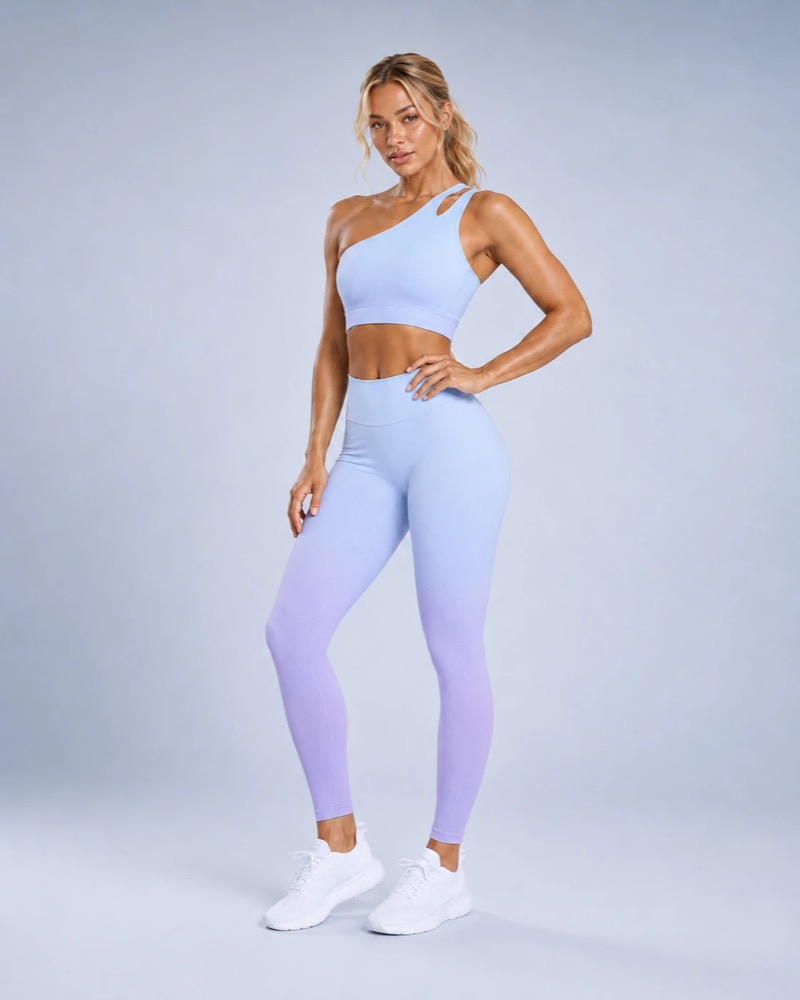
- All-over designs — gradients, ombré, camo, photographic patterns across the whole garment.
- Zero hand-feel — nothing added to the surface; breathability untouched.
- Durability — the colour is in the fibre; it won't crack or peel with stretch and wash.
- Digital economics — no screens to make, so multi-colour designs and small runs stay affordable.
Sublimation's hard limits
- Polyester only — the chemistry needs poly; on nylon-rich fabrics it won't fix properly.
- Light base colours — the ink is transparent; it can't print light on dark.
Where screen print wins
- Any fibre, any base — including nylon blends and black grounds, with opaque inks.
- Colour punch — solid Pantone-matched spot colours with real presence.
- Logo work — chest logos, leg logos, wordmarks — crisp and repeatable at volume.
Its limits: each colour needs its own screen (setup cost), and on high-stretch zones you need stretch inks and sensible artwork — huge solid blocks over a squat zone will eventually crack on any ink.
The quick decision matrix
- All-over gradient or pattern → sublimation, on a polyester style.
- Logo on nylon leggings → screen print, heat transfer or a bonded/silicone logo.
- Dark garment, bright graphic → screen print with opaque ink.
- Photographic artwork, small run → sublimation.
Both run in-house here, alongside heat transfer and bonded branding — see the full options in our branding guide, or send your artwork and we'll recommend the method with a sampled swatch.
Cost per piece: how volume flips the winner
The two methods have opposite cost curves. Screen printing is setup-heavy: each color needs its own screen, so a 4-color logo carries real fixed cost — brutal at 50 pieces, negligible at 5,000, where per-piece cost drops to cents. Sublimation is setup-light: artwork is digital, so 50 pieces and 5,000 cost nearly the same per piece; what you pay for is coverage area and press time. Rule of thumb: small orders or all-over designs favour sublimation; large orders of simple placement logos favour screen. Mixed collections often use both — sublimated pattern styles beside screen-logo basics — which is why a factory running both in-house simplifies your line planning.
Durability: how each method fails, and the tests
Sublimation dye lives inside polyester fiber — it cannot crack or peel, survives unlimited washes, and its only real weakness is fiber coverage: white fabric shows in deep stretches if the knit opens (test: full stretch over a fist under bright light). Screen prints sit on the fabric surface — their enemies are stretch and wash: low-quality plastisol cracks along stretch lines and edges lift after 20–30 cycles. Spec stretch-additive inks for anything on a stretching zone, and run the crumple-and-stretch test on strike-offs plus a 5-wash check before bulk. Placement matters as much as ink: a chest logo on a compression fit stretches 30%+ in wear — design for the stretched state.
Fabric compatibility decides before you do
Sublimation only bonds to polyester (65%+ poly content for saturated results) and only shows true color on light bases — which is why sublimated styles are built as white-base polyester garments printed all over. It will not work on nylon-dominant seamless knits; those take screen, heat-transfer or silicone prints instead. Screen printing is fabric-agnostic but design-limited. So the decision tree runs: nylon seamless base → screen/transfer/silicone branding; polyester base + all-over pattern ambition → sublimation; big-volume simple logo on anything → screen. Full branding-method matrix in the branding guide.
FAQ
Can you sublimate on nylon or dark fabric?
No — sublimation ink only bonds with polyester and is transparent, so it needs light bases. For nylon or dark garments use screen print, heat transfer or bonded logos.
Will screen prints crack on leggings?
Not if done right: stretch inks, proper curing and artwork that avoids huge solid blocks over maximum-stretch zones.
Which method lasts longer?
Sublimation is inside the fibre, so it outlasts the garment. A well-executed screen print with stretch ink also survives normal training and washing without issue.