Nylon vs Polyester for Activewear: Which Fabric, When?
Nearly every performance fabric is built on one of two fibers. Both make excellent activewear — but they behave differently against skin, in sweat, under a print head and on your cost sheet. Here's how we choose between them on the factory floor.
Quick answer: Nylon feels softer and stretches with more “give”, which is why it dominates premium leggings and seamless sets. Polyester holds printed colour better, dries faster and costs less — the default for sublimated styles and tees. Many collections use both: nylon-rich bottoms, polyester printed tops.
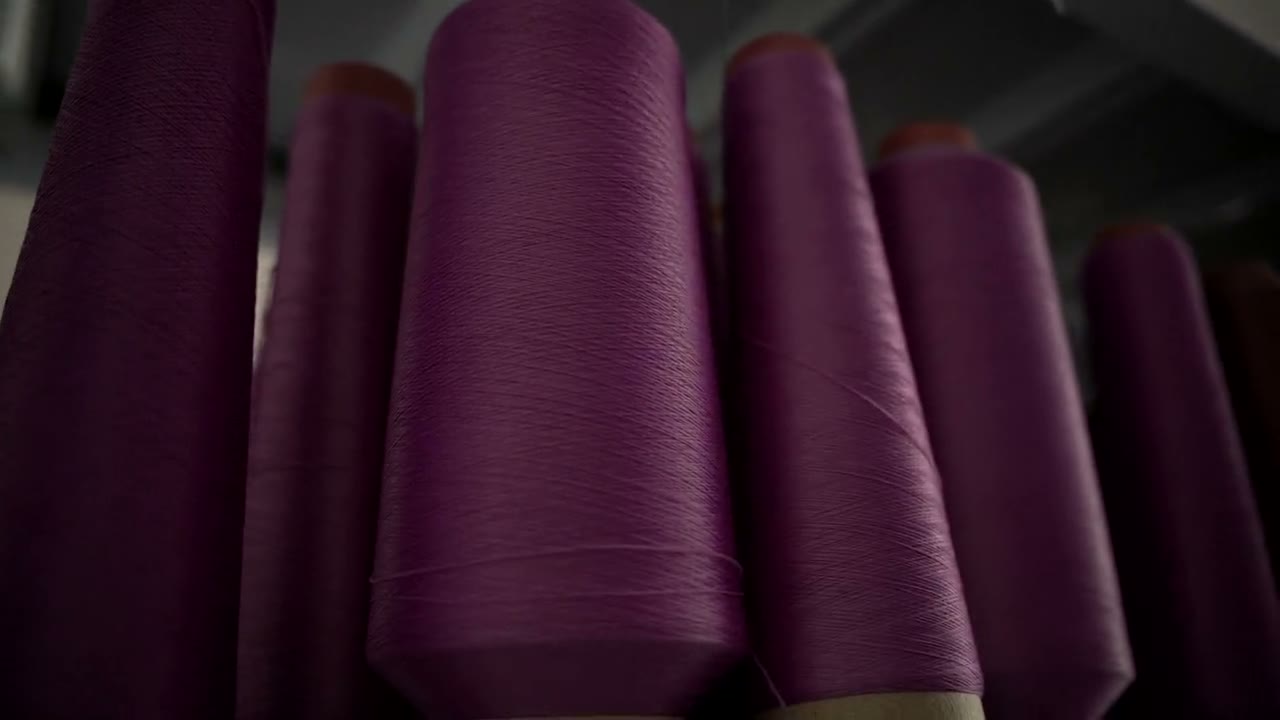
At a glance
| Nylon | Polyester | |
|---|---|---|
| Hand-feel | Softer, “buttery” | Crisper, lighter |
| Sweat | Absorbs a little; slower to dry | Hydrophobic; dries fast |
| Printing | Solid dyeing only | Dye-sublimation ready |
| Best for | Premium leggings, seamless sets | Printed tops, quick-dry styles |
| Relative cost | Higher | Lower |
What actually differs at fiber level
Both are strong synthetic fibers, so raw durability is rarely the deciding factor. The real differences show up in feel and moisture behaviour. Nylon absorbs a small amount of moisture, which is part of why it feels softer and more “buttery” against skin. Polyester is more hydrophobic: sweat sits in the knit's channels instead of the fiber, so garments dry noticeably faster. And because sublimation ink bonds chemically with polyester, photographic all-over prints are effectively a polyester-only feature.
Where nylon wins
- Premium leggings & seamless sets — softer hand, dense knit, excellent opacity for a squat-proof result.
- Rich solid colours — nylon dyes deep, saturated solids with a slight sheen.
- High-stretch comfort — with 20–25% spandex, nylon blends stretch with a forgiving, second-skin feel that suits circular seamless knitting.
Where polyester wins
- Anything printed — dye-sublimation needs polyester; gradients and all-over graphics are locked into the fiber.
- Fast drying — running and training styles that get soaked benefit from polyester's quick-dry behaviour.
- Cost control — polyester yarn is cheaper, which matters on entry-price lines and large runs.
Blends and GSM: where the real spec lives
You rarely buy “nylon” or “polyester” alone — you buy a blend and a weight. Typical compression bottoms run nylon/spandex around 75–80/20–25; printed tops often run polyester/spandex 80–90/10–20. Weight then sets opacity and drape: see our GSM guide for the numbers we recommend per product.
A quick test protocol before you commit
- Squat test on the actual colour (light colours reveal sheer fabric fastest).
- Five wash cycles: check colour, twist and recovery, not just shrinkage.
- Rub test for pilling on inner thigh and strap zones.
- Wear trial: 30 minutes of real sweat tells you more than any datasheet.
We knit and sew both fibers daily, so we have no horse in the race: the right answer is per style, not per brand. If you tell us the product and the print plan, we'll recommend the blend — and back it with a free swatch pack within 48 hours.
Price and supply dynamics in 2026
Polyester remains the cheaper fiber by a wide margin — it is the world's default synthetic, produced at colossal scale with stable pricing. Nylon (polyamide) runs meaningfully higher per kilo and moves more with feedstock markets, which is why it concentrates in premium garments where hand-feel justifies the spread. In our 3,038-style catalog the split is 88% nylon-based to 10% polyester-based — not because polyester is bad, but because seamless's value proposition is the second-skin feel nylon delivers. Where polyester owns the category: sublimated styles (the print chemistry requires it), swim (chlorine resistance engineering), and price-led basics. Watch recycled variants too: rPET is abundant; regenerated nylon is premium with tighter supply — the GRS guide covers both.
The decision matrix by product type
| Product | Pick | Why |
|---|---|---|
| Premium leggings & sets | Nylon/spandex | Buttery hand, opacity, durability |
| Sports bras | Nylon/spandex | Next-to-skin comfort, recovery |
| Sublimated / all-over print | Polyester | Dye chemistry requires it |
| Swimwear | Engineered poly or chlorine-resist blends | Chlorine/UV endurance |
| Budget basics & tees | Polyester | Cost, easy care |
| Winter brushed layers | Either, brushed | Loft matters more than fiber |
The honest summary: this is not a quality contest but a casting decision — each fiber has roles it is simply better born for. Spec the job, then the fiber, then the percentage; and whenever a quote undercuts the market, check which fiber quietly changed. A "nylon-feel" legging at a polyester price is usually exactly that — polyester with good marketing, findable in ten seconds with a burn-test or a spec sheet demand.
FAQ
Is nylon or polyester more durable?
Both wear well at equal quality. Abrasion resistance is similar at the same GSM — knit density and construction matter more than the fiber name on the label.
Can you dye-sublimate nylon?
Not reliably. Sublimation ink bonds with polyester. For nylon pieces, use solid dyeing plus screen print, heat transfer or bonded logos instead.
Which is better for sensitive skin?
Both are skin-safe when the fabric is OEKO-TEX Standard 100 certified. Perceived comfort mostly comes from the knit and spandex ratio, not the base fiber.