Quick answer: Alo publicly describes two signature fabrics: Airbrush, a matte, four-way-stretch, sculpting nylon/spandex knit with light compression, and Alosoft, an ultra-soft brushed knit with a peached, cloud-like hand. Neither is magic — both map to specs you can order: a fine-denier nylon face, a high spandex share for recovery, a mid weight for opacity, and the key finishing step (matte for Airbrush, brushed/peached for Alosoft). A capable seamless factory can build a fabric with the same feel to your spec.
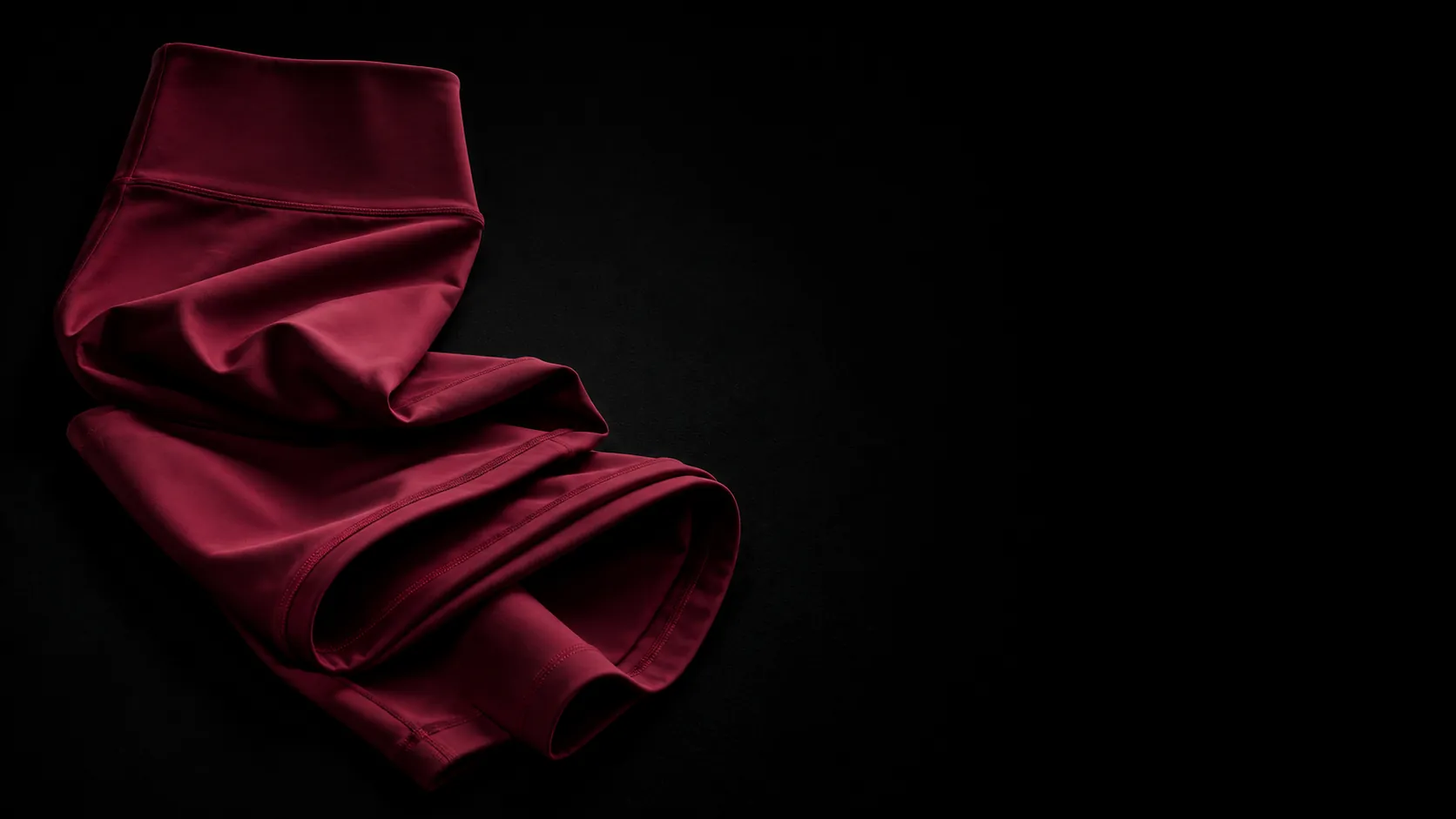
Alo’s two signature hands, in plain terms
Most of what people love about Alo comes down to two fabric families the brand names publicly:
- Airbrush — described as a matte, sculpting, four-way-stretch fabric with light compression. The “airbrushed” name is about the finish: a matte surface that hides shine and reads premium, with enough compression to smooth without squeezing.
- Alosoft — described as an ultra-soft, brushed knit. The magic here is a peached / brushed finish that gives a cloud-like, next-to-nothing hand — a softer, lower-compression feel aimed at comfort rather than heavy hold.
Notice the pattern: the finish is doing as much work as the yarn. Same base knit, matte-finished, feels like Airbrush; brushed, feels like Alosoft. That’s the single most useful insight for repro-ing the feel.
The property profile behind each feel
| Feel | What to spec | Why |
|---|---|---|
| Airbrush-style (matte, sculpting) | Nylon/spandex knit, ~230–270 GSM, matte finish, light-medium compression | Matte kills shine; weight + compression give the smooth, sculpted hold |
| Alosoft-style (brushed, buttery) | Fine-denier nylon/spandex, brushed/peached finish, softer lower-compression build | Brushing lifts a soft nap for the cloud-like next-to-skin hand |
Two levers matter most. Yarn fineness — a finer-denier nylon face feels smoother and more expensive against skin. Finish — matte vs brushed is the fork that decides which of Alo’s two feels you land on. Get those right and the fabric reads premium; the exact percentage blend matters less than founders assume. Our fabric & GSM guide covers weight, and how to make activewear like the big brands is the broader playbook.
How to brief a factory for “the Alo feel”
You brief the outcome, not the brand. A workable brief:
Sample brief: “Two fabric options for a legging: (A) matte, sculpting nylon/spandex around 250 GSM with light-medium compression; (B) fine-denier brushed/peached knit, ultra-soft, lower compression. Both squat-proof and OEKO-TEX® Standard 100. Send both as fit samples so we can feel the difference.”
Asking for both a matte and a brushed sample on the same silhouette is the fastest way to feel the Airbrush-vs-Alosoft difference in your own hands and pick your house fabric. That decision — matte sculpt vs brushed comfort — often becomes a brand’s signature.
Match the feel, not the design
To be clear about the line: fabric properties — weight, blend, matte or brushed finish, compression level — aren’t anyone’s intellectual property, so briefing a fabric with the same hand is fair game. What you must not do is copy Alo’s trademarks, protected prints or exact patterns. Aim your brief at the feel (“matte sculpting” / “brushed buttery”), design your own silhouettes, and you’re building your product honestly on a fabric that competes on hand-feel.
Getting it made
Because Yesseam knits and finishes seamless in-house, both the matte and brushed routes are ours to control — we can put an Airbrush-style matte fabric and an Alosoft-style brushed fabric in front of you on the same style, then hold whichever you pick consistently across reorders. That repeatability is the difference between a lucky sample and a house fabric you own. Per-unit reality by category is in the 2026 price benchmark.
Our fabric families, and which feel each one delivers
Rather than guess at another brand’s mill specification, here is the honest version from our side: the four fabric families we knit in-house, what each is made of, how it feels on the body and where it belongs. Match the property profile, not a name on a hang tag.
| Family | Typical composition | Hand & surface | Weight band | Best for |
|---|---|---|---|---|
| NU-LUX (buttery) | 75% nylon / 25% spandex, high-filament microfibre | Smooth, matte, second-skin; minimal sheen | 220–260 GSM | Sculpting leggings, everyday sets, the “naked” feel |
| AIR-MESH (breathable) | Nylon/spandex with zoned open structures | Light, airy, visible structure in the vented zones | 180–220 GSM | Hot-weather training, back panels, underarm and behind-knee zones |
| RIB-SEAMLESS (textured) | Nylon/spandex on a rib structure | Pronounced vertical texture, more give per course | 230–280 GSM (10–20 GSM over the flat-knit equivalent) | Statement sets, one-size pieces, bralettes with a knitted band |
| ECO-RECYCLE (GRS) | GRS-certified recycled nylon or polyester + virgin elastane | Close to the virgin equivalent; shade consistency needs planning between lots | Matches the family it replaces | Certified sustainability programmes with documented content |
Two notes that decide more than the family name. Gauge — needle density — changes hand more than composition does at the same weight (gauge guide). And shade sets the opacity floor you must hit: ≥190 GSM for black, ≥220 mid, ≥240 for light and nude (QC thresholds). Free swatches of any family ship in 48h, which is the only way to settle a hand-feel argument.
Reading the composition label without guessing
Half the confusion in this topic is vocabulary, not chemistry. The words printed on a care label are not marketing choices — they are legally defined generic fibre names, and the same fibre is required to carry a different name depending on which market the garment is sold in. Two of those pairs cover almost everything in this category.
| On a US label | On an EU label | The legal definition | What it is in practice |
|---|---|---|---|
| Nylon | Polyamide | US: a long-chain synthetic polyamide in which fewer than 85% of the amide linkages are attached directly to two aromatic rings. EU: recurring amide linkages of which at least 85% are joined to aliphatic or cycloaliphatic units. | The same fibre. A garment labelled “82% polyamide” in Berlin and “82% nylon” in Los Angeles is the identical fabric. |
| Spandex | Elastane | Both: a fibre of at least 85% (by mass) segmented polyurethane. The EU definition adds the performance test — stretched to three times its original length and released, it recovers rapidly and substantially. | Also the same fibre. “Lycra” is a brand of it, not a third material. |
Two things follow that are worth more than any hand-feel description. First, a composition label tells you the fibres and nothing about the knit — and knit structure, gauge and finishing are where most of the difference in feel is actually made. Two fabrics can both read “75% nylon / 25% elastane” and share no perceptible quality. Second, the label is silent on fabric weight, which is the one number that most reliably separates a substantial legging from a thin one; if you are comparing rather than admiring, ask for GSM measured to a stated method, and note that a heavier weight under stretch is what keeps a light shade from going see-through when you move.
Sources
| Source | What it establishes here |
|---|---|
| 16 CFR § 303.7 — Generic names and definitions for manufactured fibers, US Federal Trade Commission rules (eCFR) | The US definitions of nylon (i) and spandex (k) quoted above |
| Regulation (EU) No 1007/2011 — textile fibre names and labelling, Annex I entries 30 and 43 (EUR-Lex, in force) | The EU definitions of polyamide and elastane, including the three-times-extension recovery criterion |
| ASTM D3776/D3776M-20(2025) — Mass Per Unit Area (Weight) of Fabric | The test method behind the weight bands in the fabric-family table above |
FAQ
What fabric does Alo Yoga use?
Alo publicly names two signature fabrics: Airbrush, a matte, four-way-stretch, sculpting nylon/spandex knit with light compression; and Alosoft, an ultra-soft brushed/peached knit with a cloud-like hand. The exact mill composition is proprietary, but the feel of each maps to a spec — fine-denier nylon, high spandex for recovery, and the key finish (matte for Airbrush, brushed for Alosoft).
Can I get fabric that feels like Alosoft or Airbrush?
Yes — you specify the properties, not the brand. A brushed/peached fine-denier nylon-spandex knit gives an Alosoft-style buttery hand; a matte mid-weight nylon-spandex with light-medium compression gives an Airbrush-style sculpting feel. A capable seamless factory can produce both to your fit sample. You’re matching generic fabric properties under fair use, not copying any design.
Is Alo Airbrush the same as Lululemon Align?
No — they target different feels. Airbrush is matte and sculpting with light compression; Align uses Lululemon’s buttery, lower-compression Nulu fabric aimed at a soft yoga feel. If it’s the buttery low-compression hand you want, see our Align-style fabric guide; if it’s matte sculpt, spec the Airbrush-style route.
What GSM is Alo-style legging fabric?
Sculpting matte fabrics typically sit around 230–270 GSM for opacity and hold; softer brushed fabrics can run a touch lighter since comfort, not compression, is the goal. The finish (matte vs brushed) matters as much as the exact weight for landing the feel.
How should you evaluate Alo Yoga's performance fabrics and athletic collaborations?
The same way as any performance fabric, because a collaboration or athlete partnership changes the marketing, not the knit. Check opacity at full stretch in the actual shade, recovery after repeated stretching, pilling where the thighs rub and how the fabric handles sweat. Of Alo's two named fabrics, Airbrush — matte, sculpting, light compression — is the one aimed at movement and training; Alosoft — brushed, softer, lower compression — is built for comfort, and brushed textures are the ones to rub-test for early fuzz. We have not lab-tested Alo garments; these are the checks we would run.
What are Alo Yoga's fabrics like in texture and quality?
Alo describes Airbrush as a matte, smooth, sculpting nylon/spandex knit with light compression, and Alosoft as an ultra-soft brushed (peached) knit — so the texture is either sleek and matte or cloud-soft and brushed. Quality comes down to the same specifications as any legging: a fine-denier nylon face for smoothness, enough weight for opacity in the shade you buy, strong recovery and pilling resistance. The exact mill composition is not public, so judge a pair with the in-store checks in our guide to telling quality leggings.