Activewear Sizing & Grading: Getting Fit Right Across Sizes
Most fit disasters aren't design problems — they're grading problems. The medium fit beautifully; the XS strap slips and the XL waistband folds. Here's how sizing actually works in production, and the loop that catches issues before bulk.
Quick answer: Grading scales your approved base size up and down using fixed “grade rules” — but stretch fabrics don't scale linearly. Hips, waists and straps each need their own increments. Nail one base size on a real body first, then grade, then fit-check the ends of your size range before bulk.
Everything starts with one base size
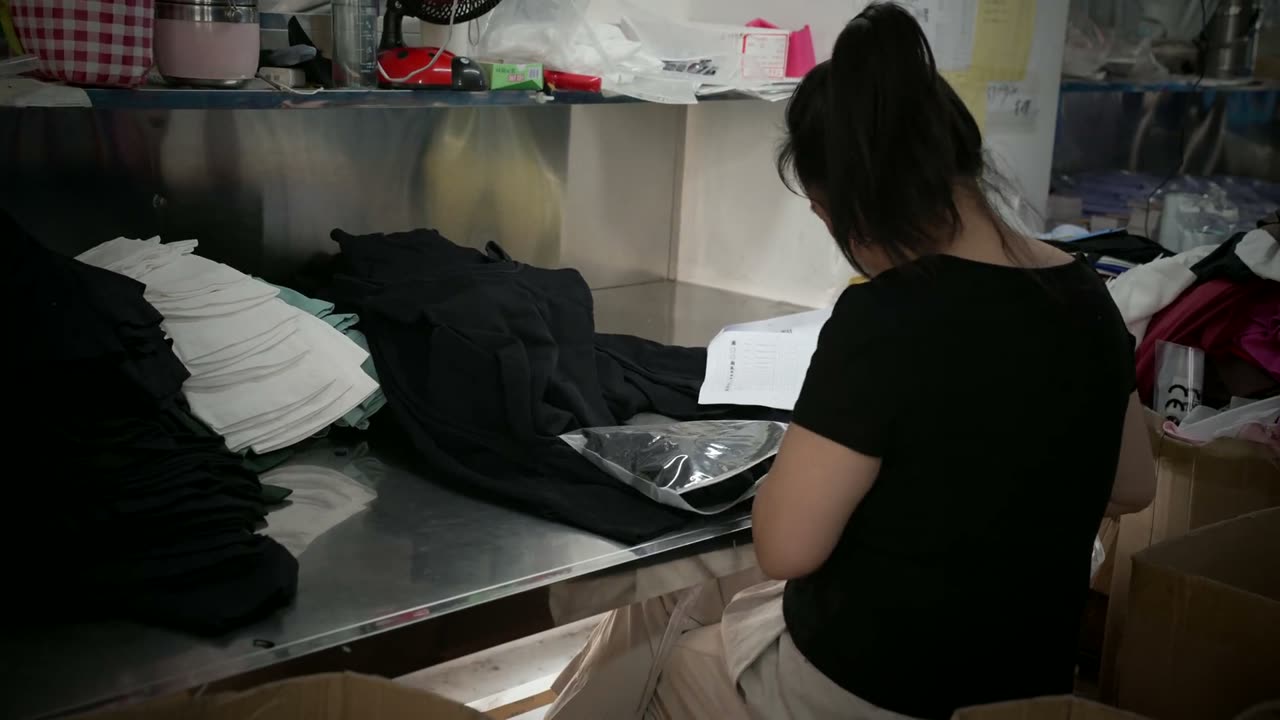
Factories don't develop five sizes at once. We perfect one base size (usually S or M) on a real body, then scale it. If the base is wrong, every graded size inherits the error — which is why the fit-sample loop concentrates on the base first.
Grade rules — and why stretch breaks them
A grade rule says “add 4 cm at the hip per size, 2 cm at the waist” and so on. With woven fabrics that's nearly mechanical. With 20%+ spandex knits, fabric tension changes how each zone behaves: straps that are stable at M can slip at XS; a waistband stable at M can fold under pressure at XL. Practical consequences:
- Hips, waist, inseam and straps get independent increments — never one uniform percentage.
- Negative ease (garment smaller than body) must be re-checked at the ends of the range.
- Compression styles narrow the tolerance window further — see our compression guide.
US, EU, UK: the size-label trap
A “US S” and a “EU S” are not the same body. If you sell cross-market, decide early: one international chart with clear cm/inch tables, or market-specific labelling. What matters in production is the cm chart, not the letter on the label — send us yours, or we'll help you build one from a reference garment.
The fit loop that saves your first run
- Round 1: base-size sample in 7–10 days → wear trial on a real body, note by zone.
- Round 2: revised base + graded set → check XS and XL specifically, not just M.
- Pre-production: measurements confirmed against the chart — stretched where relevant, not just flat.
Send us your size chart — or a garment that fits the way you want — and we'll grade from there. Fit samples in 7–10 days, measured against your chart before anything goes to bulk.
Build the size chart from bodies, not habit
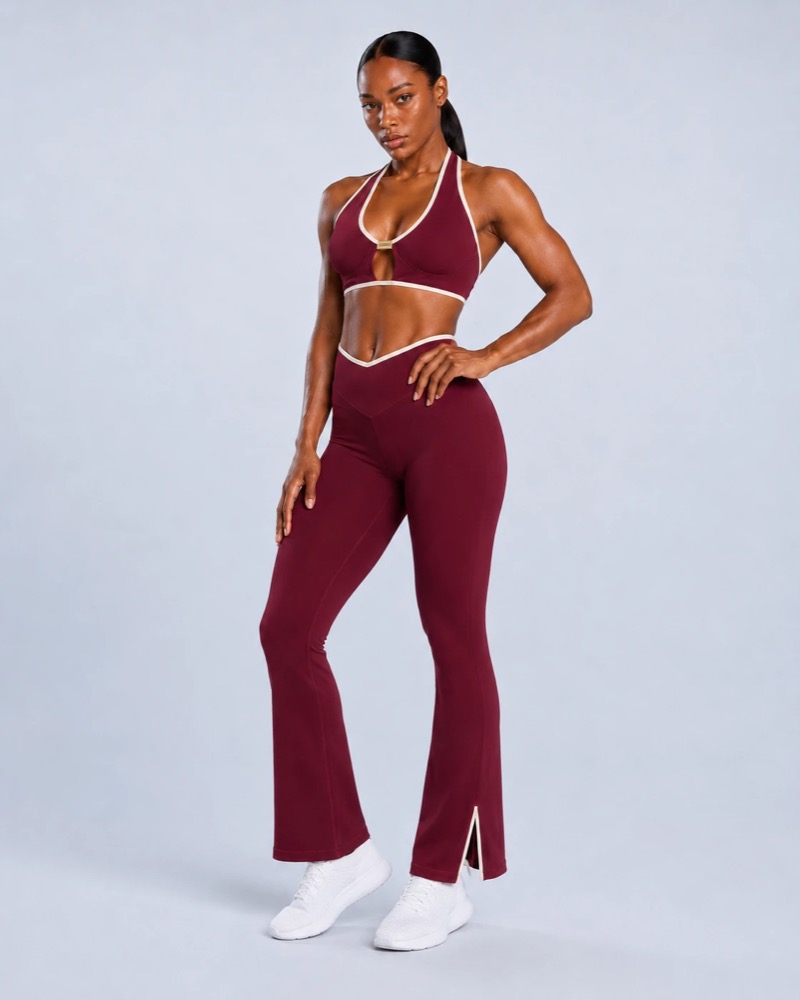
Most first size charts are copied from a competitor and quietly mismatch the brand's actual audience. Better inputs exist: your pre-launch community (a simple "help us size" survey with bust-waist-hip yields hundreds of data points), your niche's reality (a pilates-first audience skews differently than a powerlifting one), and after launch, your returns data — the single richest sizing signal you own. Read exchange patterns like a chart: systematic M→L exchanges mean the garment runs small (or the chart oversells); scattered both-direction exchanges mean the chart is fine but the fit photos mislead. Review quarterly; sizing is a live system, not a launch artifact.
Grade rules: seamless vs cut-and-sew
In cut-and-sew, grading redraws pattern pieces — each size is a new marker, and complex styles resist extreme grades. Seamless grades in the knit program: circumferences change with needle counts and stitch settings, lengths with row counts, and compression zones must be re-proportioned so hold stays consistent across sizes (the classic failure: XS crushing, XXL doing nothing, because the map was scaled linearly). Practical consequence for brands: extending a seamless range is cheap at the factory level, but insist on fit samples at your size extremes, not just the base size — machine-graded does not automatically mean body-verified.
Extended sizing done credibly
15% of our catalog styles already include XXL+, and the segment's loyalty is famously strong — but credibility requires more than adding rows to a chart. Three commitments: grade the function (deeper bras bands, longer rises, adjusted compression — not photocopied proportions), photograph the extended sizes on extended-size bodies, and stock them at launch rather than "coming soon". Where brands get burned is the third: announcing inclusivity and then backordering it. Start with your core styles in the extended run, prove sell-through, then widen — the fit-block work from the bra guide and this page compounds across every style after the first.
FAQ
How many sizes should we launch with?
XS–XL (five sizes) is the common starting range; three sizes (S/M/L) is a workable minimum for a first drop, expanding once you see real demand.
Do we need a fit model?
You need a consistent real body — a professional fit model is ideal, but the same person at every round beats a mannequin every time.
Can you match our existing size chart?
Yes. Send the chart plus, ideally, a reference garment that fits the way you want — we grade to your spec and confirm measurements at pre-production.