Starting an Activewear Brand: Reddit's Biggest Questions, Answered
We read the threads so you don't have to. These are the questions founders ask over and over in communities like r/Entrepreneur, r/smallbusiness and r/clothingstartups — answered straight, by a factory that actually makes the product.
By Allen Cai, Founder — 12 years in seamless manufacturing · Updated July 2026
Quick answer: The market rewards niche, not "another activewear brand". You can start at a 100-piece MOQ for US$3,000–10,000. Avoid trading companies, get samples before bulk, and you don't need to be able to design.
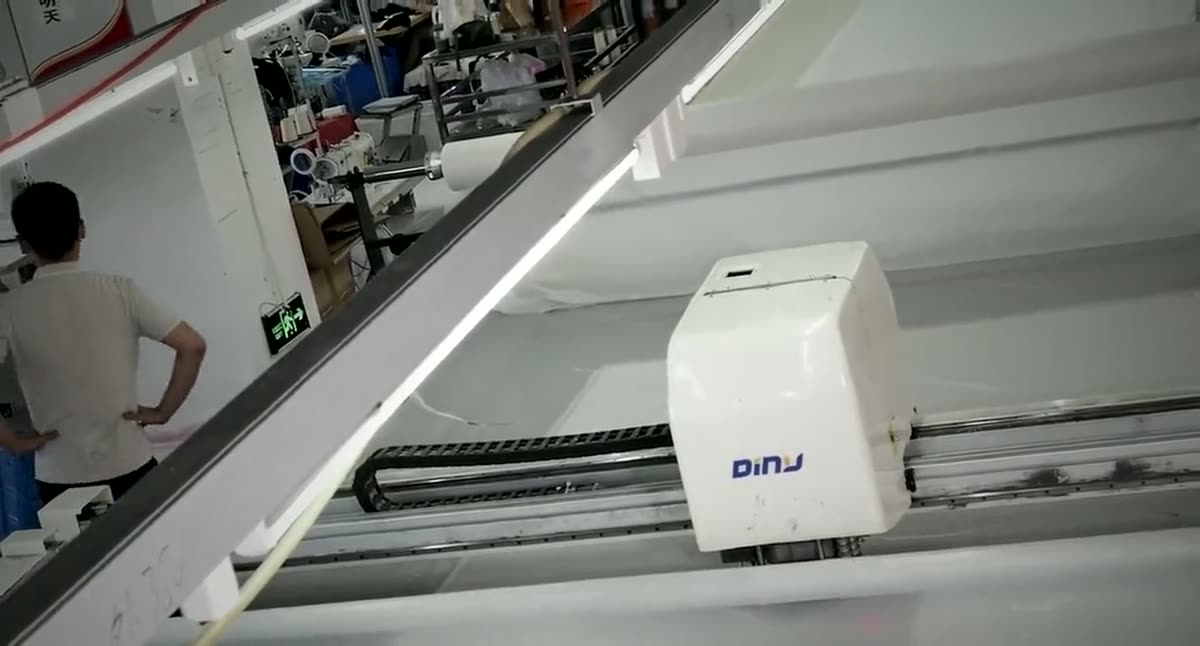
Automated fabric spreading and cutting
"Is it even worth it — isn't activewear saturated?"
Crowded, yes. Closed, no. Giants can't be niche — they sell to everyone, which means they serve no one perfectly. The brands winning in 2026 own a sharp niche (seamless sets for pilates, inclusive sizing, modest activewear, men's minimal training) and a real community. Saturation kills generic brands, not specific ones.
"How do I find a manufacturer that won't scam or ghost me?"
The fear that comes up most. The fix: talk to real factories, not trading companies. Ask for a live video call of the floor, which machines they own, and audit reports (BSCI/GRS). A factory that replies in 24h with specifics is rarely the one that disappears on you.
"How much money do I actually need?"
Reddit answers swing from US$500 to US$50k because everyone counts differently. Honest product math: a first run is roughly US$3,000–10,000 (samples + a 100-piece bulk + logos + packaging + freight). Then budget another US$1,000–3,000 for launch marketing. Full breakdown in how much it really costs.
"What MOQ should I expect — can I start under 100?"
Expect ~100 garments in total for stock styles + your logo, usually 300–500 per style per colour for full custom. Going under 100 usually means print-on-demand or a reseller's markup. 100 is the sweet spot: enough to test a style, not enough to drown in dead stock.
"Do I need tech packs if I can't design?"
No. Bring a sketch, a photo or a Pinterest board — a good factory's design team turns it into a tech pack, handles grading and fit, and sends samples. You own the vision; they own the spec.
"Should I just start with print-on-demand?"
POD is great to validate designs with zero inventory — but margins and quality are thin and you can't customise fit or fabric. Most serious brands graduate to private label once a style sells. We cover exactly when to switch in POD vs private label.
"Is Alibaba safe? How do I avoid trading companies?"
Fine for discovery, full of middlemen. Verify any supplier is a real factory before you wire money: video-call the floor, ask which machines they own, request audits, and always start with a sample order.
"How do I compete with Gymshark / Alo / Lululemon?"
You don't — not on scale. You win on niche, community and story. Serve the specific customer the giants overlook, build an audience before launch, and let fit and quality earn word of mouth that ad budgets can't buy.
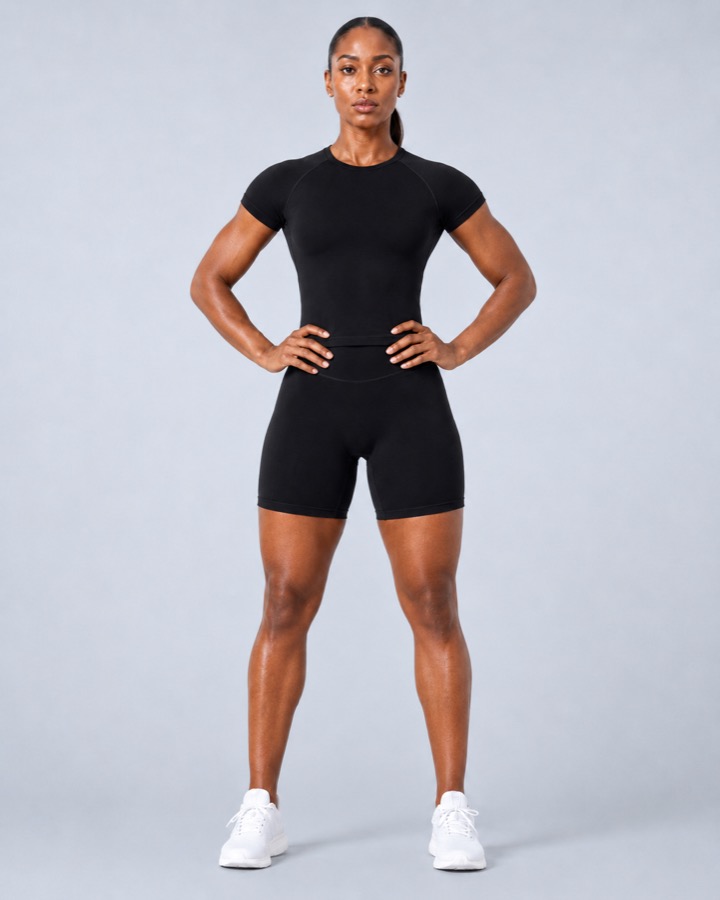
Seamless crew training set developed in-house
"How long from idea to selling?"
About 8–12 weeks: design and sampling (1–2 weeks), approval, ~30-day bulk, shipping. Build your Shopify store and warm up your audience while production runs so you sell through fast.
Have a question Reddit didn't answer?
Ask a real factory directly. Send your idea — we reply in 24h with honest advice, a quote, and a free swatch pack. MOQ 50, no obligation.
"The factory ghosted me after I paid the sample fee — normal?"
Not normal, but diagnosable. Rule out the innocent causes first: Chinese public holidays (Golden Week and CNY stall everything for 1–2 weeks), and your message sitting with a salesperson who left. Send one structured follow-up with your PI number and a deadline; if silence persists past a week, treat the sample fee as cheap tuition and move on — but log the lesson, which is usually that the "factory" was a trader with no production control. Prevention beats recovery: pay sample fees to verified companies (business licence name matching the bank account), keep first exposure small, and prefer suppliers who answer technical questions in specifics before any money moves.
"My sample was perfect but bulk feels different — what happened?"
The classic cause chain: your sample was knitted from one yarn lot and bulk from another; or the sample got premium finishing attention the production line didn't repeat; or — most common — GSM drifted a class down and nobody checked. This is precisely what the three-sample system prevents: a signed pre-production sample from bulk fabric is your comparison standard, and an AQL inspection against it before shipping catches drift while it is still the factory's problem. If you skipped both and the goods already landed: measure, photograph, claim against the PI specs in writing. Factories worth keeping respond with replacement or credit; the response itself tells you whether to reorder.
"How many colorways should each style launch with?"
Fewer than you want. The data pattern across launches we produce: one core neutral does 50–60% of a style's volume, a second strong shade does 25–30%, and colors three-plus fight for scraps while each adding a dye lot to your MOQ math. Launch at 2–3 colorways per style, weight inventory toward the neutral, and let customer requests pick color four — "back in 6 weeks by demand" is better marketing than a discount on a shade nobody wanted. The MOQ guide shows the cost math behind exactly this.
"Do I need an LLC / trademark / barcode before ordering?"
You need less than the checklist industry says. To place a factory order: a name, an address, and payment — that's it. Register the business when revenue makes it worth protecting. Trademark: file in your home market once the name is validated — before scaling ads, after first sales. Barcodes: only when marketplaces or retail require them. What you genuinely must sort before bulk: your label content (fiber %, care, origin — legally required on the garment in most markets) and product-liability basics. Spend launch energy on fit samples and content; paperwork scales with revenue, fit mistakes scale with orders.